How to Grow Basil Indoors All Year
Gardens Glow Editorial · 2026-07-25
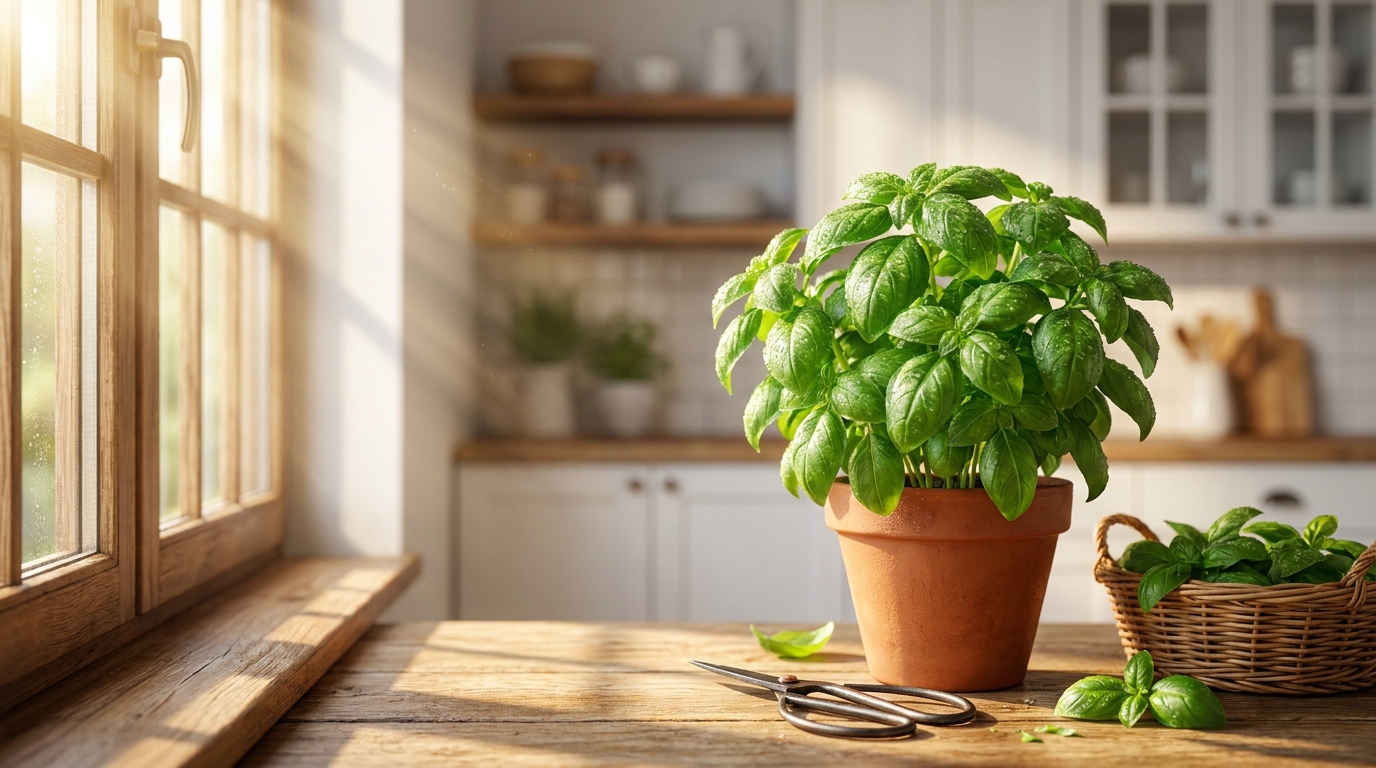
Grow basil indoors from seed, cuttings or a supermarket pot: light, warmth, watering, how to pinch it for bushy plants, and how to keep it going through winter.
Basil is the herb most people want to grow indoors, and it's perfectly possible all year, but it's fussier than mint or chives. It needs three things: lots of light, steady warmth, and regular pinching. Give it those and one plant will supply a kitchen for months. Without them, it grows tall and floppy, then gives up.
Pick a variety that suits indoors
| Variety | Why grow it indoors |
|---|---|
| Sweet or Genovese basil | Classic flavour for pesto and Italian cooking; large leaves |
| Greek or bush basil | Small leaves on a compact, naturally bushy plant; ideal for windowsills |
| Thai basil | Aniseed flavour for Southeast Asian dishes; a little tougher |
| Lemon and lime basil | Citrus scent; good with fish and in drinks |
| Purple basil | Decorative; slightly slower growing |
Three ways to start
From seed
Sow seeds on the surface of moist seed compost, cover very lightly, and keep somewhere warm, around 20–25°C (68–77°F). Seedlings usually appear in five to ten days. Thin to three or four plants per 15 cm (6 in) pot. Sow a new pot every four to six weeks so there's always a young, productive plant coming on (RHS).
From cuttings
Cut a 10 cm (4 in) shoot just below a leaf joint, remove the lower leaves and stand it in a glass of water on a bright windowsill. Roots appear in one to two weeks; pot it up when they're a couple of centimetres long. It's the quickest way to turn one plant into several, and to keep a favourite going through winter.
From a supermarket pot
Supermarket basil is dozens of seedlings crowded into one pot, which is why it usually collapses. Tip it out, gently split the root ball into three or four clumps, and pot each into its own container of fresh compost. Keep them out of strong sun for a few days while they recover.
Light: the make-or-break factor
Basil wants at least six hours of direct sun a day: a south-facing window is best (north-facing in the Southern Hemisphere). In autumn and winter, natural light alone usually isn't enough. An LED grow light 15–30 cm (6–12 in) above the plants, on for 12–14 hours a day on a timer, keeps basil compact and productive. Turn pots a quarter turn every few days if they're leaning toward the window.
Warmth
Basil is a tropical plant. It's happiest at 18–24°C (65–75°F) and suffers below about 12°C (54°F). Cold glass at night can blacken leaves that touch it, so pull pots back from the window on cold nights. Keep it away from cold draughts and from the dry, direct heat of radiators.
Pots, compost and watering
- Use a pot at least 15 cm (6 in) across with drainage holes, and a good multipurpose potting mix.
- Water when the top 2–3 cm of compost feels dry, ideally in the morning, at the base of the plant.
- Basil hates both drying out completely and sitting wet. Always empty saucers after watering. Signs of too much water are covered in signs of overwatering.
- Feed with a liquid fertilizer at half strength every two to three weeks while it's growing.
How to pinch basil for bushy plants
This is the step that makes the biggest difference. Basil grows straight up from a single stem unless you stop it.
- When a plant has three or four pairs of leaves, cut or pinch the stem just above the second or third pair.
- Two new shoots will grow from the leaf joints below the cut.
- When each of those has a few pairs of leaves, pinch them in the same way.
- Keep harvesting this way, always taking the tops, never just the big lower leaves.
Pinch off flower buds as soon as they appear. Once basil flowers, leaf production slows and the leaves turn more bitter.
Common problems
- Tall, leggy stems: not enough light, or not pinched. Add a grow light and start pinching.
- Black or dark patches on leaves: cold damage.
- Yellow leaves: usually overwatering; sometimes hunger in an old pot.
- Yellowing with grey fuzz under the leaves: basil downy mildew. Remove affected plants, improve air flow and water at the base.
- Sticky leaves, tiny insects: aphids or whitefly. Rinse the plant under the tap every few days.
- Plant collapses in winter: too cold and too dark. A grow light and a warmer spot fix both.
Keeping basil going year-round
Even well-kept basil plants get woody after a few months. The easiest routine is a small rotation: start a new pot from seed or cuttings every month or so, and retire the oldest plant when it starts to decline. If you have more than you can use, freeze it chopped in oil in ice cube trays rather than drying it; basil loses most of its flavour when dried. See how to dry and preserve herbs.
Frequently asked questions
Why does my indoor basil keep dying?
Usually too little light, cold, or an overcrowded supermarket pot. Divide supermarket basil, give it a sunny window or grow light, and keep it warm.
How often should I water basil indoors?
When the top 2–3 cm of compost is dry, often every two to four days in summer and less in winter.
Can basil grow in a north-facing window?
Not well on its own. Add a grow light, or choose mint, chives or parsley for that window instead.
For other herbs that suit indoor growing, see the 10 best herbs to grow on a windowsill. More in our herbs collection.