How to Dry Fresh Herbs at Home: 4 Easy Methods
Gardens Glow Editorial · 2026-07-25
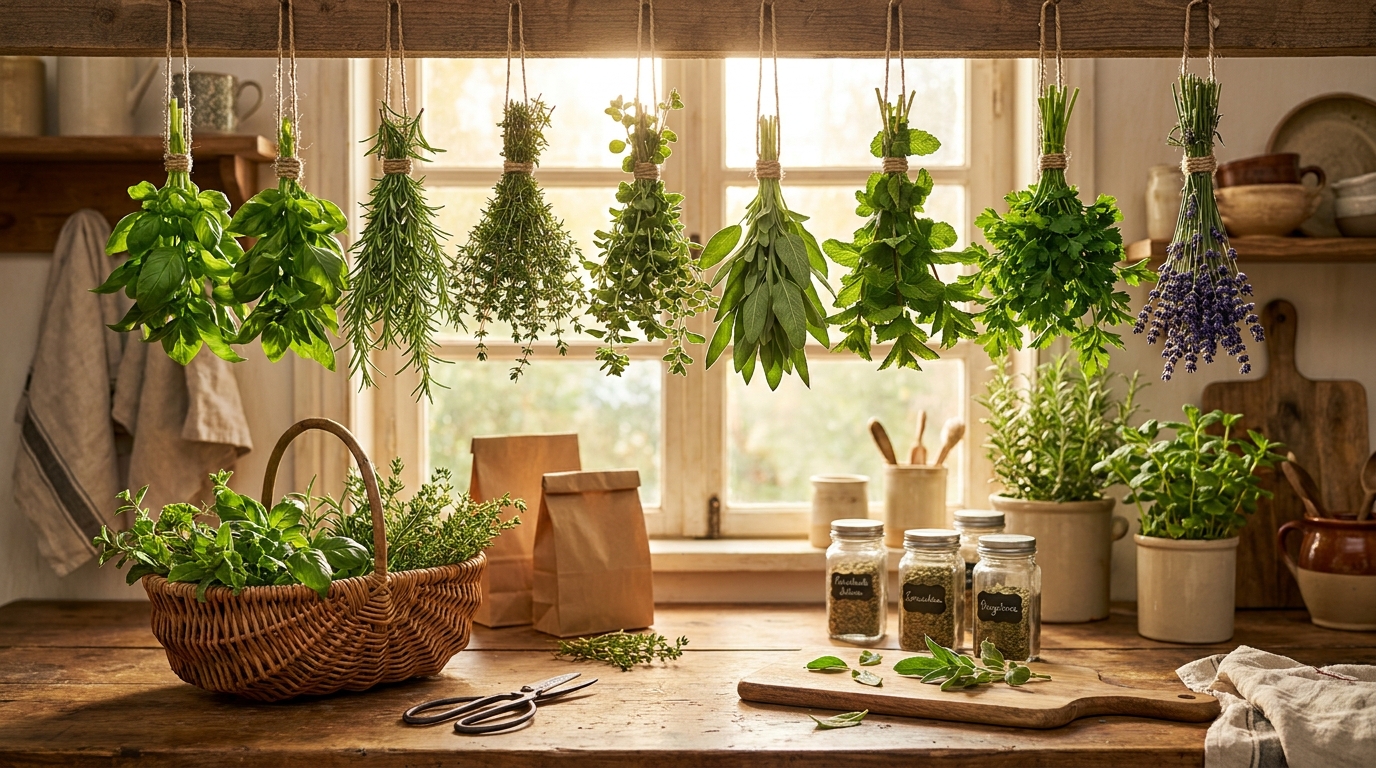
Which herbs dry well and which to freeze instead, when to harvest, and how to air-dry, oven-dry, dehydrate or microwave herbs, then store them so they keep.
Drying is the easiest way to keep summer herbs for winter cooking, but it doesn't suit every herb. Woody, low-moisture herbs such as rosemary, thyme, oregano and sage dry beautifully and keep their flavour. Soft, leafy herbs such as basil, parsley and chives lose most of theirs and are better frozen.
Which herbs dry well?
| Dry these | Freeze these instead |
|---|---|
| Rosemary, thyme, oregano, marjoram, sage, bay, mint, lemon balm, lavender, dill and fennel seed | Basil, parsley, chives, cilantro (coriander), tarragon, chervil |
Mint and lemon balm sit in between: they dry well for tea, though they lose some of their brightness for cooking.
When to harvest
- Just before flowering, when the leaves have the most oil and flavour.
- In the morning, after the dew has dried but before the heat of the day.
- Healthy stems only: skip yellow, damaged or diseased leaves.
- Leave the plant room to regrow: take no more than about a third of the plant at once.
If you don't have a garden, windowsill and balcony herbs are easy to grow; see the best herbs to grow on a windowsill or build a vertical herb garden.
Prepare the herbs
Shake off insects and dust. Rinse only if the herbs are dirty, then pat dry and leave them to air-dry completely on a towel; any surface water slows drying and can cause mould. Remove any damaged leaves.
Method 1: Air drying (best for woody herbs)
- Tie 5–10 stems together at the base with string or a rubber band (it tightens as the stems shrink).
- Optionally, slip a paper bag with a few holes punched in it over the bunch to keep off dust and catch falling leaves.
- Hang upside down somewhere warm, dark, dry and airy: a spare room, airing cupboard or shed. Avoid the kitchen, where steam slows drying.
- Leave for one to three weeks, until the leaves crumble easily.
Small-leaved herbs can also be spread in a single layer on a tray or a screen and turned every day or two.
Method 2: Oven drying (fast, needs care)
Spread leaves in a single layer on a baking tray. Use the oven's lowest setting, around 80°C (180°F) or lower, with the door slightly open to let moisture escape, and check often; herbs can scorch in minutes (National Center for Home Food Preservation). Expect two to four hours. Oven drying loses more flavour than slower methods, so it's best for mint and sturdier herbs.
Method 3: A food dehydrator (most reliable)
A dehydrator gives even, gentle heat. Set it to a low temperature, about 35–46°C (95–115°F), spread herbs in a single layer and dry for one to four hours, depending on the herb. It's the best option in humid climates where air drying takes too long.
Method 4: The microwave (small batches)
For a handful of leaves, lay them between two sheets of kitchen paper and microwave in 20–30 second bursts, checking each time, for one to three minutes in total. Stop as soon as they're crisp. It works well for small amounts but is easy to overdo.
How to tell they're dry
Properly dried leaves crumble when rubbed between your fingers and stems snap rather than bend. If anything feels leathery or soft, dry it longer; any moisture left will cause mould in storage.
Storing dried herbs
- Strip leaves from stems but keep them whole if you can; crush them just before using to keep more flavour.
- Store in airtight glass jars away from light and heat; not above the stove.
- Label with the herb and date.
- Check jars after a week. Any condensation inside means they weren't fully dry; dry them again.
- Use within about a year. Faded colour and weak smell mean it's time to replace them.
Freezing the herbs that don't dry well
Chop basil, parsley, chives or cilantro, pack them into ice cube trays, top up with olive oil or water and freeze. Pop the cubes straight into sauces, soups and stews. Basil also freezes well blended with oil into a simple paste.
Cooking with dried herbs
Dried herbs are more concentrated than fresh. As a rule of thumb, use about one teaspoon of dried herb in place of one tablespoon of fresh. Add woody dried herbs early in cooking so they can soften and release their flavour.
Lavender and flowers
Lavender, chamomile and calendula petals dry the same way. For lavender, cut stems when about half the flowers are open; our lavender guide covers harvesting.
Frequently asked questions
How long do herbs take to air dry?
Usually one to three weeks, depending on the herb, the humidity and air flow.
Can you dry basil?
You can, but it loses much of its flavour. Freezing basil in oil keeps more of its taste. See our guide to growing basil indoors for a fresh supply all year.
Why did my dried herbs go mouldy?
They weren't fully dry before storing, or they were dried somewhere too humid. Make sure leaves crumble before jarring them.
Should I wash herbs before drying?
Only if they're dirty. If you do, dry them thoroughly on a towel before you start.
More herb guides in our herbs collection.