Signs of Overwatering and How to Save the Plant
Gardens Glow Editorial · 2026-07-25
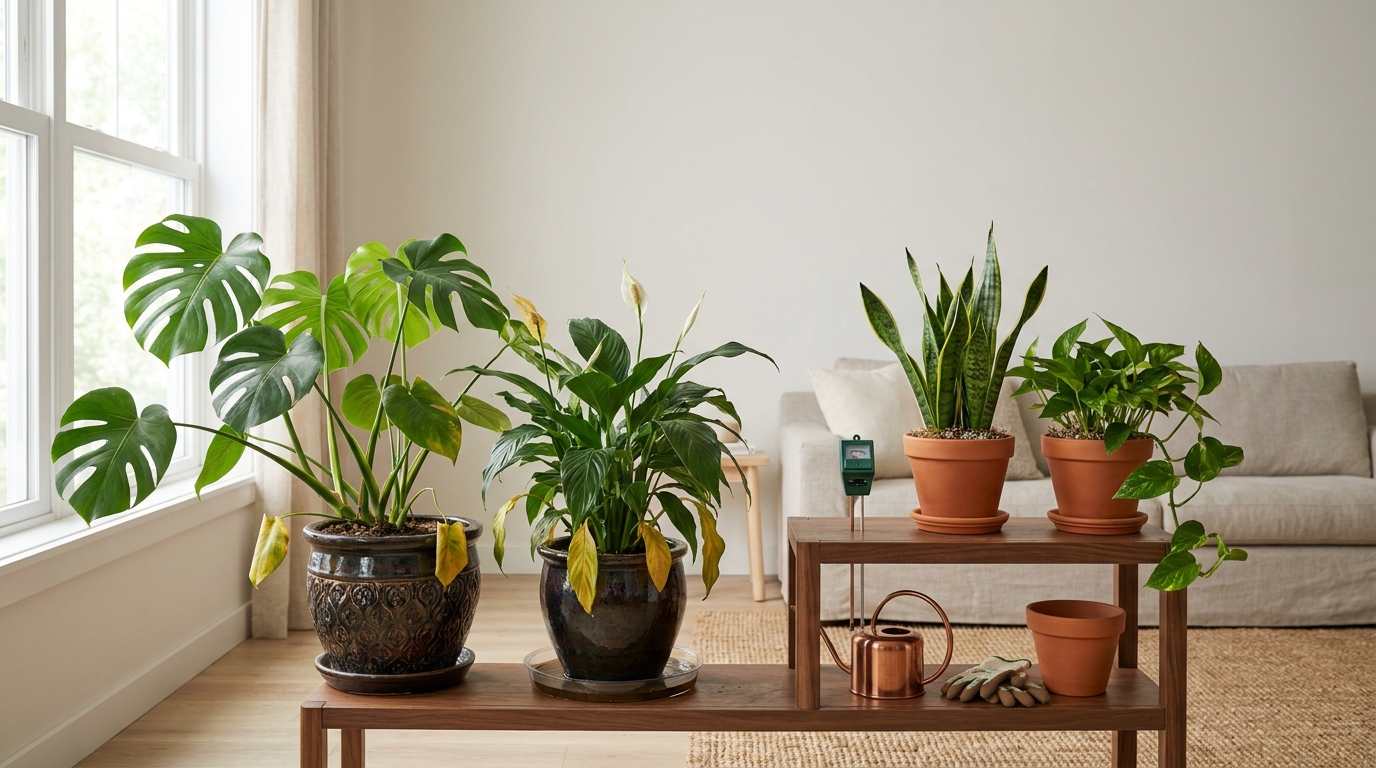
How to tell an overwatered plant from a thirsty one, check the roots for rot, and rescue it step by step. Plus the watering habits that stop it happening again.
Overwatering is the most common way houseplants die, and it's confusing because an overwatered plant often looks thirsty: it wilts and its leaves go yellow. The difference is in the soil. If a plant is drooping and the soil is still wet, more water is the last thing it needs.
Overwatered or underwatered?
| Sign | Overwatered | Underwatered |
|---|---|---|
| Soil | Wet or soggy days after watering | Bone dry, pulling away from the pot |
| Leaves | Yellow, soft, limp; often lower leaves first | Dry, crispy, brown edges; curled |
| Wilting | Wilts even though soil is wet | Wilts and perks up within hours of watering |
| Stems | Soft, dark or mushy at the base | Firm, may shrivel |
| Smell | Musty or sour soil | None |
| Pests | Fungus gnats hovering over the soil | Spider mites in dry air |
The warning signs in detail
Yellowing leaves
Usually starting with the older, lower leaves, which turn yellow and soft rather than dry. Waterlogged roots can't take up nutrients properly, so the plant starts to starve.
Wilting in wet soil
The clearest sign of all. Damaged, rotting roots can't move water up to the leaves, so the plant droops despite sitting in moisture.
Soft or blackened stems
Mushy, dark tissue at the base of the stem means rot has spread up from the roots. Act quickly.
Fungus gnats
Tiny black flies hovering around the pot breed in constantly damp compost. They're a nuisance rather than a danger, but they're a reliable sign the soil is staying too wet.
Mould or a sour smell
White fuzz on the soil surface or a musty smell from the pot means the soil isn't drying out at all.
Leaf drop and brown patches
Some plants, such as fiddle-leaf figs, drop leaves or develop brown patches when their roots sit wet for too long.
Check the roots
The only way to know how bad it is: slide the plant out of its pot and look.
- Healthy roots are firm and white or light tan.
- Rotten roots are brown or black, soft, and may slip off in your fingers or smell bad.
A few rotten roots on an otherwise healthy root ball is easy to fix. If most roots are mushy, it's time to take cuttings.
How to rescue an overwatered plant
- Stop watering and move the plant out of direct sun into bright, indirect light.
- Take it out of the pot and gently remove the soggy compost.
- Cut away rotten roots with clean scissors, back to firm, healthy tissue.
- Repot in fresh, dry potting mix in a pot with drainage holes. If you removed a lot of root, use a slightly smaller pot so the compost doesn't stay wet.
- Water lightly and then wait until the top few centimetres are dry before watering again.
- Be patient. It can take several weeks to see new growth.
If the roots are too far gone, take stem cuttings from healthy growth. Pothos, philodendrons, tradescantia and many others root easily in a glass of water.
If the plant has only mild symptoms and the roots look fine, you may not need to repot: just let the soil dry out properly and adjust how often you water.
How to stop it happening again
- Water by touch, not by calendar. Push a finger 2–3 cm into the soil and water only when it's dry. Our guide on how to water indoor and balcony plants covers this in detail.
- Always use pots with drainage holes, and empty saucers after watering.
- Don't over-pot. A pot much bigger than the root ball holds lots of wet compost the roots can't reach. Go up only one size when repotting.
- Match the mix to the plant. Succulents, cacti and herbs such as rosemary need gritty, fast-draining mix.
- Water less in winter, when light is low and plants grow slowly.
- Consider terracotta for plants that like to dry out; it breathes and dries faster than plastic.
Plants that are easy to overwater
Succulents, cacti, snake plants, ZZ plants, jade plants, rosemary and fiddle-leaf figs are particularly sensitive. If you tend to over-love your plants, ferns, peace lilies and spider plants are more forgiving. See our list of easy indoor plants for beginners, and for herbs, the best herbs to grow on a windowsill.
Frequently asked questions
Can a plant recover from overwatering?
Yes, if some healthy roots remain. Let the soil dry out, trim rotten roots and repot in fresh mix. Severely rotted plants are best saved by taking cuttings.
How long does it take for soil to dry after overwatering?
From a few days to two weeks, depending on pot size, light and temperature. Repotting into dry mix is faster.
Should I put an overwatered plant in the sun?
No. Bright, indirect light is better while it recovers; strong sun stresses a plant with damaged roots.
What does root rot smell like?
Sour, musty or like rotting vegetables. Healthy compost smells earthy.
The RHS houseplant pages have care guides for individual plants. More in our indoor plants section.