15 Easy Indoor Plants for Beginners
Gardens Glow Editorial · 2026-07-25
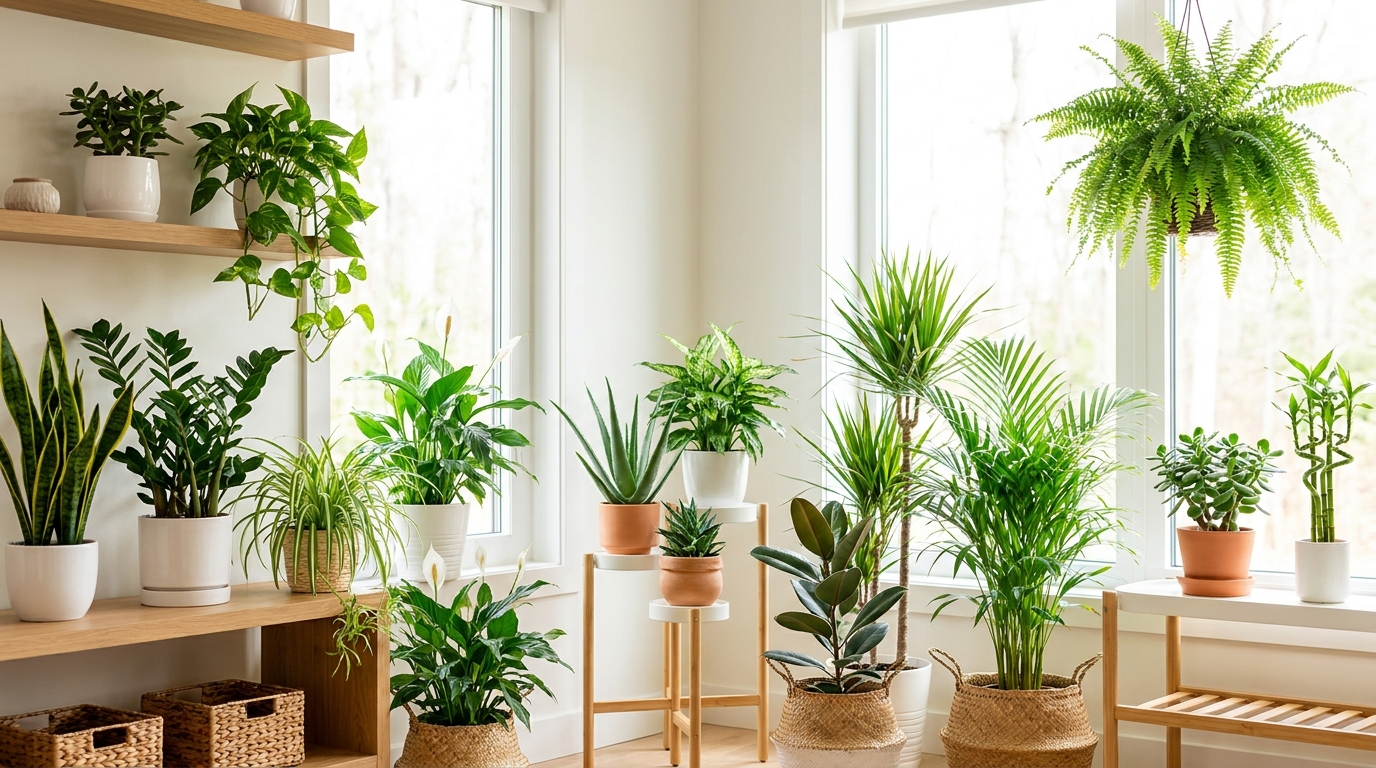
Fifteen forgiving houseplants matched to your light and how often you remember to water, with a pet-safety check for each and simple care basics.
The easiest indoor plants are the ones that forgive the two most common beginner mistakes: too little light and irregular watering. All fifteen below cope with less-than-perfect care. Pick based on how bright your room is and whether you have pets, since several popular houseplants are toxic to cats and dogs.
The 15 at a glance
| Plant | Light | Water when | Pet-safe? |
|---|---|---|---|
| Snake plant | Low to bright | Soil is completely dry | No |
| Pothos | Low to bright, indirect | Top half of soil is dry | No |
| ZZ plant | Low to bright, indirect | Soil is completely dry | Keep away from pets* |
| Spider plant | Medium to bright, indirect | Top 2–3 cm is dry | Yes |
| Peace lily | Low to medium | Leaves just start to droop | No |
| Aloe vera | Bright, some direct sun | Soil is completely dry | No |
| Chinese evergreen | Low to medium | Top 2–3 cm is dry | No |
| Jade plant | Bright, some direct sun | Soil is completely dry | No |
| Rubber plant | Medium to bright, indirect | Top 3–5 cm is dry | No |
| Cast iron plant | Low | Top half of soil is dry | Yes |
| Boston fern | Medium, indirect | Keep lightly moist | Yes |
| Heartleaf philodendron | Low to bright, indirect | Top half of soil is dry | No |
| Parlour palm | Low to medium | Top 2–3 cm is dry | Yes |
| Hoya (wax plant) | Bright, indirect | Soil is mostly dry | Yes |
| Dracaena | Low to medium | Top 3–5 cm is dry | No |
Pet safety is based on the ASPCA toxic and non-toxic plants list; check it for any plant you're unsure about. *The ZZ plant isn't on the ASPCA list, but like its relatives pothos and philodendron it contains calcium oxalate crystals, so treat it as unsafe for pets.
For low light
1. Snake plant (Sansevieria)
Upright, sword-like leaves that tolerate dim corners, dry air and weeks of neglect. The only thing that reliably kills it is overwatering. In winter, it may need water only once a month.
2. ZZ plant
Glossy leaves and thick underground rhizomes that store water, so it copes with missed waterings better than almost anything. Slow-growing in low light, faster in brighter rooms.
3. Cast iron plant (Aspidistra)
Named for being nearly indestructible. Dark green leaves that tolerate deep shade, cool rooms and irregular watering. Very slow-growing, so buy the size you want.
4. Peace lily
One of the few flowering plants that blooms in lower light. Usefully, it tells you when it's thirsty: the leaves droop, then recover within hours of watering.
5. Chinese evergreen (Aglaonema)
Patterned leaves in green, silver and pink. Tolerant of low light and dry air, but keep it away from cold draughts.
6. Parlour palm
A small, slow palm for shady corners, and one of the few palms that's happy indoors without bright light.
7. Dracaena
Tall, architectural plants in many leaf colours. Brown leaf tips are usually caused by dry air or minerals in tap water, and are cosmetic.
For medium to bright rooms
8. Pothos
A fast-growing trailing plant for shelves and hanging pots. It grows in low light, but it's fuller and more variegated in bright, indirect light. Trim long stems and root the cuttings in water to make more plants.
9. Heartleaf philodendron
Similar to pothos, with soft, heart-shaped leaves. Equally easy and equally quick to root from cuttings.
10. Spider plant
Arching striped leaves and baby "spiderettes" that hang from long stems and root easily. Pet-safe and forgiving, though brown tips appear if it dries out too often.
11. Rubber plant (Ficus elastica)
Large, glossy leaves that grow into a small indoor tree. Wipe the leaves occasionally to keep them shiny and able to use the light.
12. Boston fern
Lush, feathery fronds for a bright bathroom or kitchen, where humidity is higher. It's the one plant here that shouldn't dry out; keep the soil lightly moist.
13. Hoya
Thick, waxy leaves on trailing stems, and clusters of scented, star-shaped flowers once the plant is settled. Let it dry out between waterings, and don't move it once it starts to bud.
For sunny windowsills
14. Aloe vera
A succulent that needs bright light and a gritty, fast-draining mix. Water deeply, then let it dry out completely.
15. Jade plant
A slow-growing succulent "tree" with thick, rounded leaves. Lots of light and very little water keep it compact.
Five care basics for every houseplant
- Use pots with drainage holes. No holes is the fastest way to kill any of these plants.
- Water by feel, not by schedule. See how to water indoor plants properly.
- Water less in winter, when light and growth drop.
- Feed lightly once a month in spring and summer only.
- Repot only when roots fill the pot, and go up just one pot size.
If a plant starts yellowing and drooping in wet soil, read signs of overwatering and how to save the plant.
Want edible houseplants too?
Herbs grow well indoors with enough light. Start with the best herbs to grow on a windowsill or basil indoors.
Frequently asked questions
What is the easiest houseplant to keep alive?
The ZZ plant and snake plant: both tolerate low light and long dry spells.
Which easy houseplants are safe for cats and dogs?
Spider plant, Boston fern, parlour palm, cast iron plant and hoya are all listed as non-toxic by the ASPCA.
Do indoor plants need sunlight?
All plants need light, but many on this list cope with low, indirect light. Very dark corners with no window nearby need a grow light.
More in our indoor plants section.