How to Water Indoor and Balcony Plants Properly
Gardens Glow Editorial · 2026-07-26
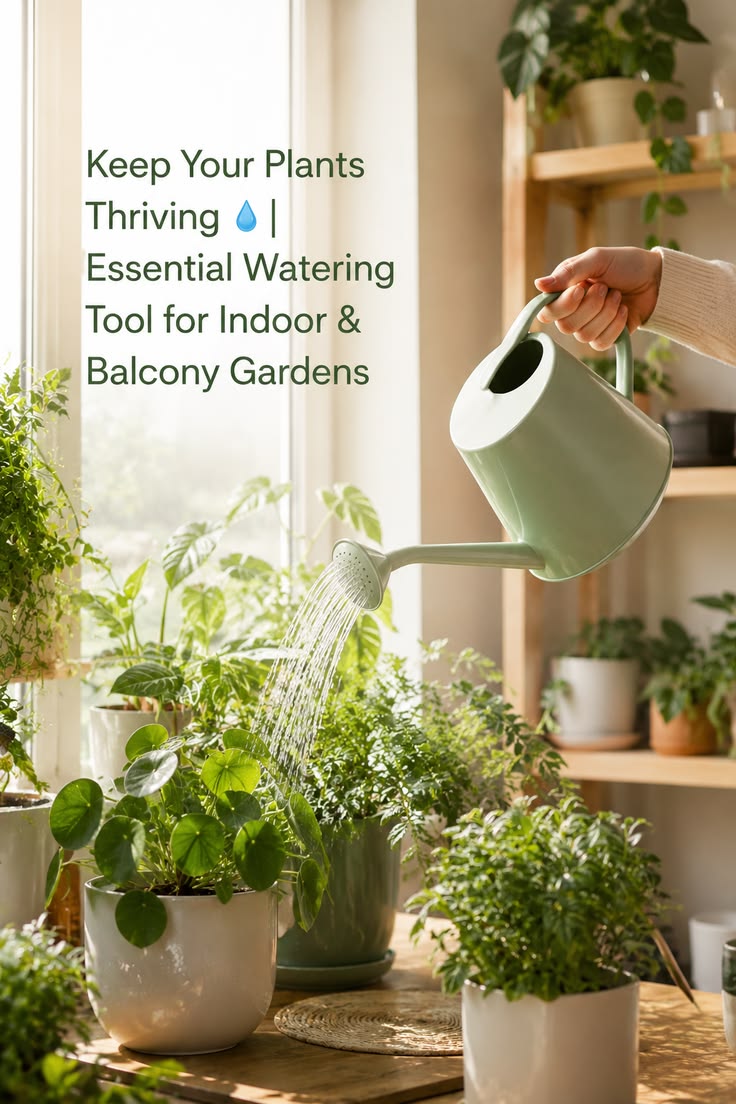
When to water houseplants and balcony pots, how much to give, the watering can worth buying, and how to keep containers alive through heat and holidays.
More houseplants and balcony pots die from the wrong watering than from anything else, and it's usually too much, not too little. The fix isn't a schedule. It's learning to check the soil, then watering thoroughly when it's actually needed.
Check the soil, not the calendar
Plants use water at different rates depending on light, temperature, pot size and season. A fixed "every Sunday" routine overwaters in winter and underwaters in summer. Instead, check before you water:
- The finger test: push a finger 2–3 cm (about an inch) into the soil. Dry at that depth means water most plants; damp means wait.
- The lift test: pick up the pot right after watering and again a few days later. With practice, you can feel when it's light and dry.
- Look for clues: soil shrinking from the edge of the pot, or a terracotta pot turning pale, both mean it's dry.
Some plants break the rule. Succulents, cacti, snake plants and ZZ plants should dry out almost completely between waterings. Ferns and peace lilies prefer soil that stays lightly moist.
How to water
- Water thoroughly, slowly pouring around the whole soil surface until water runs out of the drainage holes. A small splash only wets the top layer, so the roots underneath stay dry.
- Empty the saucer after 15–20 minutes. Roots sitting in water rot.
- Water the soil, not the leaves. Wet foliage, especially in low light, invites fungal problems.
- Water in the morning where possible, so any splashes dry during the day.
Bottom watering works well for plants with dense foliage, such as African violets, or for very dry compost that repels water: stand the pot in a bowl of water for 20–30 minutes, then let it drain.
Drainage matters more than you think
A pot without drainage holes is the single biggest cause of overwatering. Excess water has nowhere to go and the bottom of the pot turns into a swamp. If you love a decorative pot with no holes, use it as an outer cover and keep the plant in a plastic pot with holes inside it. Remove the inner pot to water, let it drain, then put it back. If your plant is already showing yellow leaves or wilting in wet soil, read signs you're overwatering your plants.
Choosing a watering can
| Use | What to look for |
|---|---|
| Houseplants | 1–2 litres, with a long, narrow spout to reach under leaves and water the soil precisely |
| Balcony pots | 5–9 litres, with a removable rose (sprinkler head) and a balanced handle |
| Seedlings | A fine rose that turns upward, for a gentle shower that won't flatten them |
Plastic cans are light and cheap; galvanised metal ones last longer but are heavier when full. Whatever you choose, a can you can carry comfortably when full is the one you'll actually use. Leave a filled can standing overnight indoors and the water will be at room temperature, which tropical houseplants prefer to cold water from the tap.
Indoor plants through the year
- Spring and summer: plants are growing, so they need more water. Many will need watering every five to ten days.
- Autumn and winter: growth slows and light drops, so most houseplants need far less, sometimes every two to three weeks. Overwatering is most common in winter.
- Near radiators: warm, dry air dries soil faster, but don't compensate by drowning the plant. Check more often instead.
If you're choosing new plants, our list of easy indoor plants for beginners includes several that forgive missed waterings.
Balcony and patio containers
Outdoor pots are a different story. Sun, wind and warm walls can dry a small container in a single afternoon (RHS).
- Use bigger pots. A large pot holds far more water than several small ones and dries out much more slowly.
- Check daily in summer, and twice a day in a heatwave for small pots and hanging baskets.
- Water early in the morning or in the evening, not in the midday sun.
- Mulch the surface with gravel or bark to reduce evaporation.
- Group pots together; they shade each other and hold humidity.
- Collect rainwater if you can; many plants prefer it.
For edible containers, see how often to water vegetable plants, and for heatwaves, our guide to protecting plants from extreme heat.
Going on holiday
- Water thoroughly the day before you leave.
- Move indoor plants away from sunny windows to slow their water use.
- Stand pots on a tray of wet gravel, or in a bath on a damp towel.
- For balcony pots, a simple drip kit on a tap timer or self-watering spikes keep things going for a week or more.
Frequently asked questions
How often should I water indoor plants?
There's no single answer. Most houseplants need water when the top 2–3 cm of soil is dry: roughly every one to two weeks in summer and less in winter.
Is it better to water plants from the top or the bottom?
Both work. Top watering is quicker; bottom watering is useful for compost that has dried out and stopped absorbing water.
Can I use tap water for houseplants?
Yes, for most plants. Let it stand to reach room temperature. Carnivorous plants and some orchids prefer rainwater or distilled water.
Why do my balcony plants wilt every afternoon?
Pots that are too small for the plant, full sun and wind. Move to bigger pots, water in the morning and group them together.
More houseplant help in our indoor plants section.