How to Build a Vertical Herb Garden That Thrives
Gardens Glow Editorial · 2026-07-25
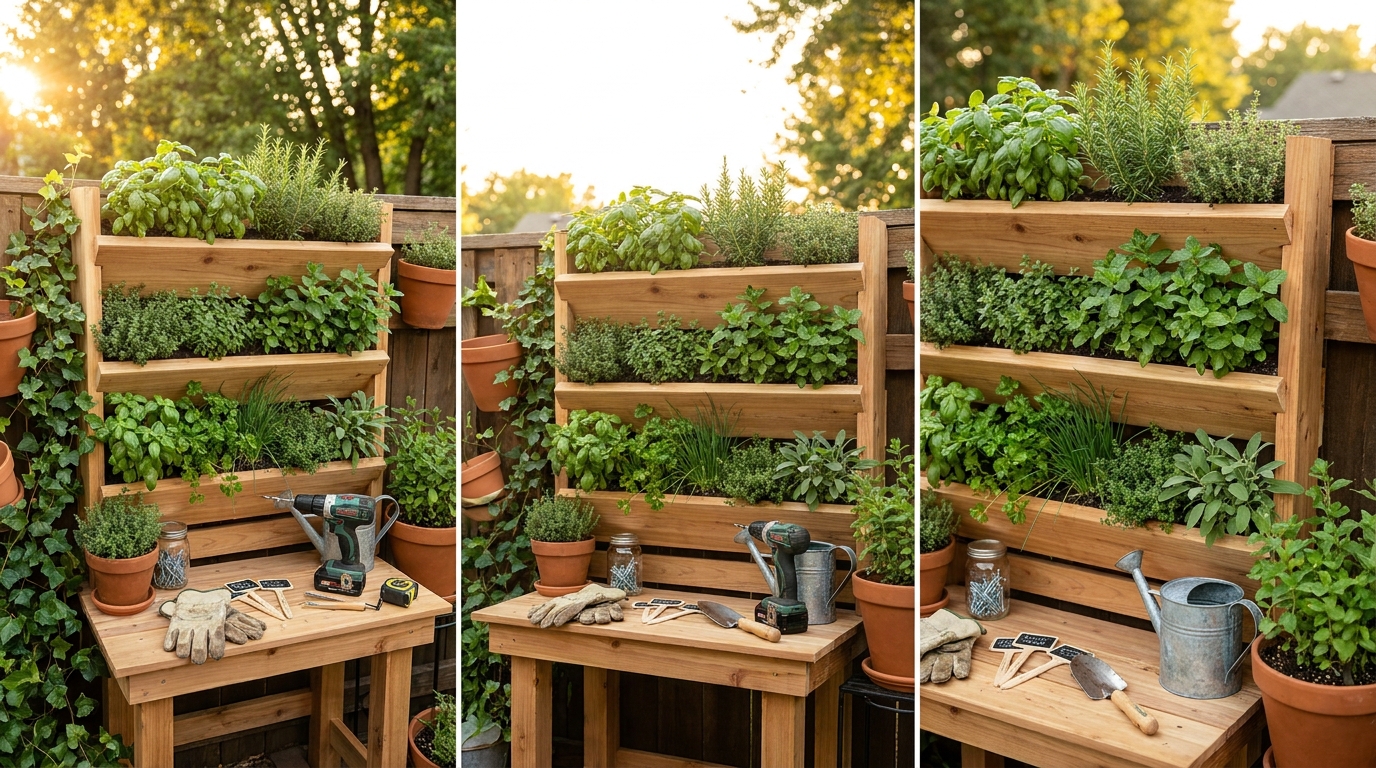
Choose the right vertical system, place each herb by how fast it dries out, and build a simple wall-rail herb planter in an afternoon. Watering tips included.
A vertical herb garden lets you grow a dozen kitchen herbs in the footprint of a single pot: on a sunny wall, a balcony railing or a fence. The design itself is easy. What makes the difference between a lush herb wall and a row of crispy pots is one rule most guides skip: water runs down and the top dries out first. Plan around that, and almost any system will work.
Choose a vertical system
| System | Best for | Watch out for |
|---|---|---|
| Wall rail with hanging pots | Balconies, kitchen walls, renters (few screws) | Needs solid fixings; small pots dry out fast |
| Ladder or tiered shelf | Renters, patios; no drilling | Lower shelves get shaded by upper ones |
| Felt pocket planter | Covering a large wall cheaply | Dries out very quickly; can drip and stain walls |
| Pallet planter | Rustic look, lots of planting space | Heavy when wet; only use heat-treated pallets |
| Gutter or trough planters | Fences, shallow-rooted herbs | Only about 10 cm deep; too shallow for parsley or rosemary |
| Stacking tower planter | Small corners, patios | Top tier dries fast; check daily in summer |
If you're building your first one, a wall rail with individual pots is the most forgiving: each herb gets its own soil and drainage, you can swap a struggling plant in seconds, and nothing drips through felt onto the wall. Step-by-step instructions are below.
Using a pallet? Look for the "HT" (heat-treated) stamp and avoid any marked "MB", which means it was treated with methyl bromide, a pesticide you don't want near food.
Pick the right spot
- Sun: most culinary herbs need at least six hours of direct sun. A south- or west-facing wall is ideal.
- Heat: sunny walls radiate heat. In midsummer, a south wall can scorch small pots, so they need more frequent watering than pots on the ground.
- Weight: a single 15 cm (6 in) pot weighs roughly 2 kg (4–5 lb) once watered, so nine pots weigh nearly 20 kg (40 lb) or more. Fix rails into studs or masonry with proper wall plugs, not just plasterboard.
- Runoff: water drains down the wall and onto whatever is below, including your neighbour's balcony. Plan for drip trays or a gravel strip underneath.
Arrange herbs from top to bottom
Because water drains downward and the top gets the most sun and wind, each level of a vertical garden behaves like a different climate. Use that:
- Top row (driest, sunniest): rosemary, thyme, oregano, sage. These Mediterranean herbs like to dry out between waterings and want full sun and free-draining soil.
- Middle rows: basil, chives, cilantro, parsley. They like steady moisture and plenty of light.
- Bottom row (wettest, some shade): mint, lemon balm, parsley. They tolerate catching runoff from above and cope with partial shade.
Two more placement tips: put trailing herbs such as creeping thyme or prostrate rosemary along the edges, where they can spill over; and always give mint its own container, because its runners will take over anything it shares with (RHS).
Build it: a wall-rail herb planter in an afternoon
You'll need
- Two or three metal rails or sturdy wooden battens, about 80–100 cm (30–40 in) long
- 6–9 hanging pots with drainage holes, at least 15 cm (6 in) across
- Wall plugs and screws rated for the weight, plus a drill and a spirit level
- Peat-free multipurpose potting mix and a bag of perlite or horticultural grit
- Herb plants (young plants establish faster than seed on a wall)
- Optional: drip trays for the bottom row, and a drip irrigation kit with a timer
Steps
- Mark the rail positions. Space them about 35–45 cm (14–18 in) apart vertically so taller herbs don't shade the row above them. Use a spirit level so water doesn't pool at one end of each pot.
- Fix the rails securely. Drill into studs or masonry and use wall plugs rated for at least the full wet weight of the pots on each rail.
- Pot up the herbs. Use straight potting mix for basil, parsley, chives and mint. For thyme, oregano, sage and rosemary, mix in about one part perlite or grit to three parts compost so they drain fast.
- Hang from the top down, following the dry-to-wet arrangement above.
- Water in slowly from the top row, watching how much reaches the bottom. Add drip trays to the lowest row if you're above a floor or another balcony.
Like this kind of project? Our hanging strawberry planter video uses the same space-saving idea for fruit.
Soil: keep it light
Never use garden soil in a vertical planter. It's heavy, compacts into a brick in pots and drains poorly. A good-quality potting mix is lighter and holds both air and water. Mixing in a slow-release fertilizer at planting time keeps leafy herbs fed for the first couple of months. Herbs in pots also need repotting or fresh compost once they get straggly or rootbound (RHS).
Watering: the make-or-break job
- Check daily in summer. Small pots and felt pockets on a warm wall can dry out in a single afternoon.
- Water each pot individually, slowly. A fast splash runs straight through the top pots and floods the bottom ones.
- Feel the bottom row before you water it. It often stays damp from runoff and needs less than you think.
- Automate larger walls. A simple drip kit on a tap timer, with one emitter per pot, is the most reliable way to keep a big herb wall alive through a holiday or heatwave.
Feeding and harvesting
From spring to late summer, give leafy herbs (basil, parsley, chives, mint) a liquid feed at half strength every two to four weeks. Thyme, oregano, sage and rosemary need little or none. Harvest little and often: pinch stems just above a pair of leaves so plants branch and stay compact. Replace annual herbs such as basil and cilantro each season, and dry your surplus before the first frost.
Care through the seasons
- Spring: scrape off the top 3–5 cm (1–2 in) of old compost from each pot and replace it with fresh mix. Replace any perennial herbs that came through winter woody and sparse, and plant out basil only once nights are reliably warm.
- Summer: this is peak watering season. Harvest hard and often; regular cutting keeps a herb wall compact and stops plants flowering.
- Autumn: pull out annual herbs once they decline, or pot a basil plant up and bring it indoors. Cut perennial herbs back lightly, but not into old wood.
- Winter: thyme, sage, oregano, mint and rosemary can usually stay outdoors in their pots once established (RHS), but small pots on a wall freeze through much faster than plants in the ground. In a cold area, move the rails or pots to a sheltered wall, wrap them in bubble wrap during hard frosts, and water only sparingly.
How many herbs will fit?
A 1 m (40 in) rail comfortably holds three or four 15 cm pots with room to grow, so three rails give you nine to twelve herbs. That's enough for one or two of each herb most kitchens use regularly. A felt pocket planter of the same width holds more plants, but each pocket has less soil and dries out faster.
An indoor vertical herb garden
Indoors, a tiered shelf or rail next to your brightest window works well. Add trays under every pot, since indoor walls and floors don't forgive drips. Most kitchens don't get enough light for basil and rosemary in winter, so an LED grow strip on a 12–14 hour timer makes a real difference. For herb choices by window direction, see our guide to the best herbs to grow on a windowsill.
Common mistakes
- Mixing thirsty and drought-loving herbs in the same pocket or trough.
- Pots or pockets that are too small: basil and rosemary need real root depth.
- Planting mint alongside other herbs.
- Underestimating the wet weight and fixing rails into plasterboard alone.
- Packing plants too tightly, which cuts air flow and invites mildew.
- Watering the whole wall in one quick pass from the top.
Frequently asked questions
What are the best herbs for a vertical garden?
Compact herbs do best: thyme, oregano, chives, parsley, basil and mint (in its own pot). Rosemary and sage work at the top in larger pots.
How often should I water a vertical herb garden?
Check every day in summer and every two to three days in cooler weather. Water when the top 2–3 cm of soil is dry, and remember the top row dries out first.
Will a vertical garden damage my wall?
Not if you keep moisture off it. Individual pots on rails, a gap of a few centimetres between the planter and the wall, or a waterproof backing board will protect paint and brickwork.
Can I grow a vertical herb garden indoors?
Yes, next to a bright window with trays under every pot. In winter, add a grow light for sun-loving herbs like basil.
Do vertical planters need special soil?
Not special, just light: a good potting mix, with perlite or grit added for Mediterranean herbs. Never use garden soil.
More growing ideas in our herbs and DIY projects collections.