How to Make a Bee Water Station in 10 Minutes
Gardens Glow Editorial · 2026-07-26
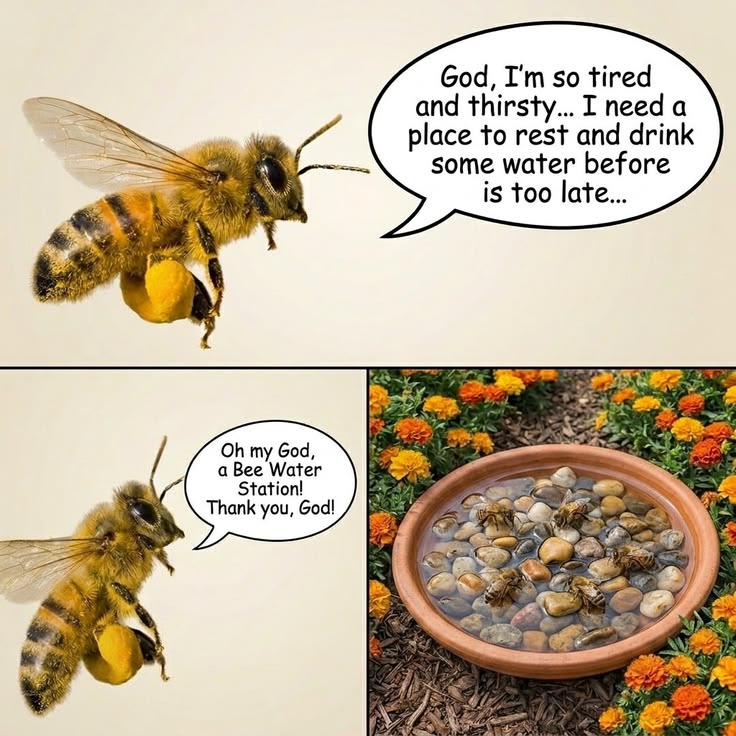
A shallow dish, some pebbles and water make a safe drinking spot for bees. How to build one, where to put it, and how to keep it clean and mosquito-free.
Bees need water as well as nectar. They drink it, carry it back to cool the hive on hot days, and use it to dilute stored honey. The problem is that open water is dangerous for them: a bee that lands on a deep birdbath often drowns. A bee water station solves that with a shallow dish full of stones, so there's always somewhere dry to stand while drinking. It takes about ten minutes and things you probably already have.
What you need
- A shallow dish: a plant saucer, an old pie dish, a terracotta tray or a wide, shallow bowl, ideally 25–40 cm (10–16 in) across.
- Landing material: pebbles, flat stones, glass marbles, corks, sticks or pieces of bark. A mix of sizes works best.
- Water: rainwater if you have it; tap water is fine.
How to make it
- Clean the dish with plain water. Avoid soap or detergent residue.
- Fill it with stones so the whole base is covered, with some larger stones standing higher than the rest. These give bees plenty of dry perches at different heights.
- Add water slowly until it sits just below the tops of the stones. Bees should be able to stand on a dry surface and reach down to drink.
- Add a few floats such as corks or a piece of bark, so any bee that does fall in can climb out.
That's it. The important part is the ratio: lots of surfaces, very little open water.
Where to put it
- Near flowers bees already visit, so they find it quickly. A spot within a few metres of lavender, salvias, herbs or a pollinator border is ideal.
- On the ground or a low, stable surface, such as a step or an upturned pot, where it won't get knocked over.
- In dappled shade, so the water doesn't evaporate within hours or heat up in full afternoon sun.
- Somewhere sheltered from wind, which dries it out and blows bees off course.
- Away from busy doors and seating, for your comfort and theirs.
It can take a week or two for bees to discover a new water source. Once they do, they'll come back to it regularly.
Keep it clean and mosquito-free
- Top up daily in hot weather; a shallow dish can dry out in an afternoon.
- Empty and refill completely every two or three days. Mosquitoes need about a week of standing water to develop from egg to adult, so regular changes stop them breeding.
- Scrub weekly with a brush and plain water to remove algae.
- Never add sugar or honey. Sugar water attracts wasps, and honey can spread bee diseases.
Variations to try
A hanging water dish
Hang a shallow saucer from a tree branch or bracket with three lengths of wire or chain. It keeps the water away from pets and slugs.
A water station inside a planter
Sink a saucer into the soil surface of a large pot of flowering herbs, so bees can drink right next to their food. Thyme, marjoram and chives suit this well; see the best herbs to grow on a windowsill for compact choices.
A mosaic dish
If you enjoy decorative projects, a shallow mosaic dish makes a lovely permanent station. Our mosaic stepping stones video shows the basic technique.
A "beach" in a pond
If you have a pond, slope one edge gently with pebbles so that bees, birds and frogs can reach the water safely.
Bees aren't the only visitors
Butterflies, hoverflies, wasps and small birds will use your water station too. Butterflies in particular like to drink from damp sand or mud; you can add a corner of wet sand to the dish for them. For plants that feed them, see our guides to butterfly garden flowers and flowers for hummingbirds.
Other easy ways to help bees
- Grow flowers from early spring to late autumn, especially single, open flowers.
- Leave a patch of lawn unmown so clover and dandelions can flower.
- Leave some bare, sunny soil, since many solitary bees nest in the ground.
- Avoid insecticides, especially on plants in flower.
Frequently asked questions
Do bees really need water?
Yes. Honeybees collect water to cool the hive and to dilute honey; solitary bees and bumblebees drink it too, especially in hot weather.
Will a bee water station attract wasps?
Some, especially in late summer. Placing it away from seating and never adding sugar keeps them to a minimum.
How deep should the water be?
Very shallow: just below the tops of the stones. If a bee can't stand on something dry while drinking, it's too deep.
Should I put the water station in sun or shade?
Dappled or partial shade is best. Full sun makes the water evaporate quickly; deep shade is harder for bees to find.
Find more simple projects in our DIY garden projects.