How to Improve Garden Soil: A Practical Guide
Gardens Glow Editorial · 2026-07-25
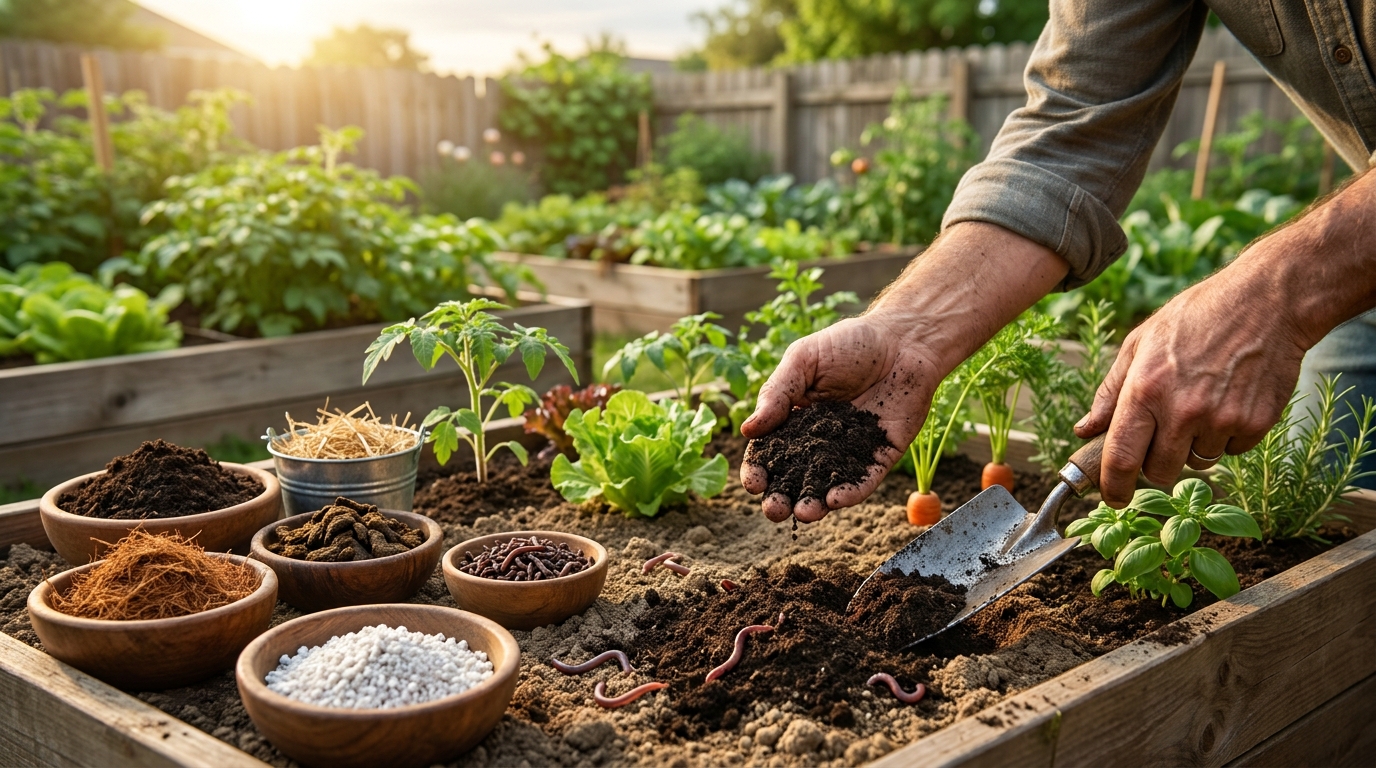
Find out what soil you have with two simple tests, then fix clay, sand, compaction and the wrong pH. Why organic matter solves most soil problems.
Almost every soil problem, whether it's sticky clay, dry sand or tired, compacted ground, has the same main fix: add organic matter, every year, and stop treading on the beds. Before you start, though, it pays to spend ten minutes finding out what kind of soil you actually have. The tests below need nothing more than your hands, a jar and a spade.
Step 1: Find out what soil you have
The squeeze test
Take a handful of moist soil and squeeze it:
- Feels gritty and falls apart: sandy soil. Drains fast, warms quickly in spring, but dries out and loses nutrients easily.
- Feels smooth and silky, holds a loose shape: silty soil. Fertile but compacts easily.
- Feels sticky, rolls into a sausage you can bend into a ring: clay soil. Rich in nutrients and holds water well, but drains slowly, gets waterlogged in winter and bakes hard in summer.
- Holds together but crumbles when poked: loam, the balanced soil gardeners hope for.
The jar test
For a clearer picture, half-fill a clear jar with soil, top it up with water, add a pinch of salt or dishwasher detergent, shake it hard and leave it. Sand settles in a minute or two, silt over a few hours, and clay can take a day or more. The thickness of each layer shows roughly what your soil is made of. The RHS soil types guide explains each type in detail.
The drainage test
Dig a hole about 30 cm (1 ft) deep, fill it with water, let it drain, then fill it again. If the second fill drains within a few hours, drainage is fine. If water is still standing the next day, you have a drainage problem to deal with before planting anything that dislikes wet roots.
The pH test
An inexpensive soil test kit tells you whether your soil is acidic, neutral or alkaline. Most vegetables and garden plants do best between about pH 6 and 7. Test a few spots, as it can vary across a garden.
Step 2: Add organic matter (the fix for nearly everything)
Compost, well-rotted manure, leaf mould and composted bark all do the same job: they bind sandy soil so it holds water and nutrients, and open up clay so it drains and is easier to work. They also feed the earthworms and soil life that keep soil crumbly.
- How much: spread a layer 5–8 cm (2–3 in) deep over beds every year, usually in autumn or early spring.
- Dig it in or leave it on top? Both work. Leaving it on the surface as a mulch (the "no-dig" approach) is less work, and worms pull it down for you. Over a couple of years, the soil improves noticeably.
- Only well-rotted manure: fresh manure can scorch plants. It should be dark, crumbly and not smell strongly.
Making your own compost is the cheapest source; see the RHS composting guide, or put a worm tower straight into a vegetable bed.
Fixing specific problems
Heavy clay
- Add organic matter every year; this is the long-term fix.
- Never dig or walk on clay when it's wet. It compresses into a solid mass.
- Build raised beds or use wide, permanent beds with paths, so you never step on the growing area.
- Don't add small amounts of sand to clay. Without huge quantities, it can make the texture worse.
Sandy soil
- Add organic matter generously and keep the soil mulched all year, since sand burns through it quickly.
- Water deeply and less often, and feed little and often, because nutrients wash through.
Compacted soil
- Loosen it once with a fork, rocking the tines back and forth without turning the soil over.
- Then keep it loose: mulch, add organic matter and keep feet off the beds.
Poor drainage
- Raised beds are the quickest fix for growing vegetables and plants that hate wet feet.
- Choose plants that tolerate wet ground for the soggiest spots instead of fighting them.
The wrong pH
- Too acidic (below about 6 for vegetables): add garden lime in autumn, following the rate on the pack and your test result.
- Too alkaline: it's hard to lower pH permanently. Grow plants that suit it, or use raised beds or pots of ericaceous (lime-free) compost for acid-loving plants such as blueberries.
Step 3: Keep it healthy
- Never leave soil bare. Mulch around plants, and sow a green manure such as clover, phacelia or field beans on empty beds over winter. Dig or chop them in a few weeks before planting.
- Rotate vegetable crops so the same family doesn't grow in the same place every year.
- Mulch every year (RHS mulching guide).
- Feed the soil, not just the plant. Organic matter does more long-term good than any bag of fertilizer. For when plants do need a boost, see homemade fertilizers that work.
Your weeds are clues
Weeds hint at soil conditions. Creeping buttercup and moss suggest wet, poorly drained ground; nettles and chickweed suggest fertile soil. See our guide to common garden weeds.
Frequently asked questions
What is the fastest way to improve garden soil?
Spread a thick layer of well-rotted compost or manure. For a quick start with vegetables on poor ground, a raised bed filled with good topsoil and compost works in a single season.
How often should I add compost?
Once a year is plenty for most beds: a 5–8 cm (2–3 in) layer in autumn or spring.
Can I improve clay soil without digging?
Yes. Mulching with organic matter every year and letting worms work it in slowly transforms clay over two or three years.
Do I need to test my soil pH?
It's worth doing once, especially before planting vegetables, fruit or acid-loving plants. Kits are cheap and quick.
More fundamentals in our 25 tips for beginners and garden tips.