How to Make a Worm Tower for Your Vegetable Garden
Gardens Glow Editorial · 2026-07-26
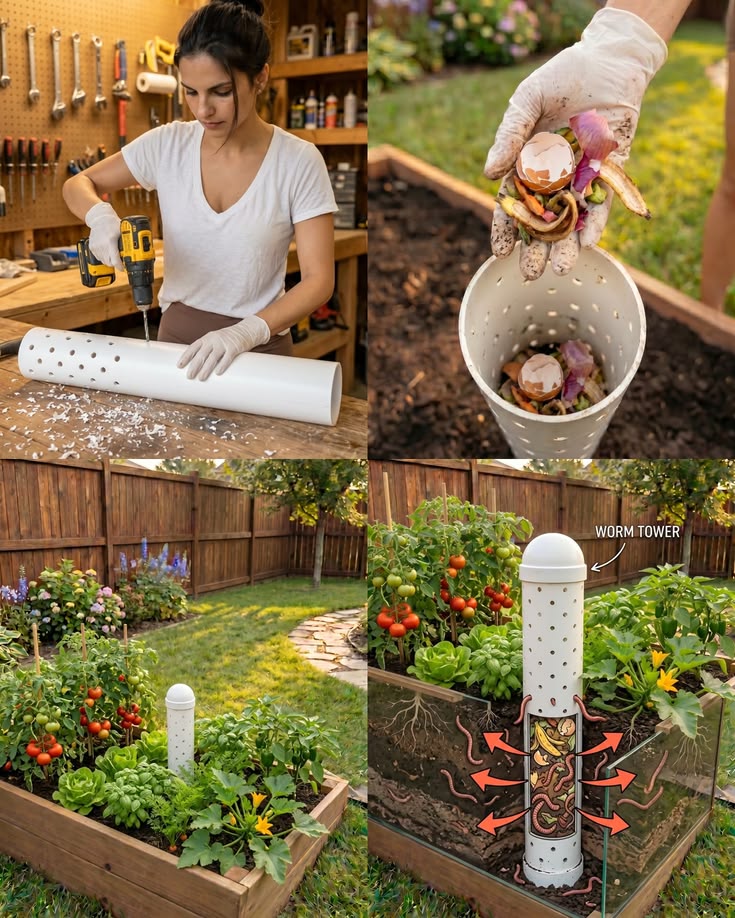
A worm tower turns kitchen scraps into compost right inside your vegetable bed. What you need, how to build one in an hour, what to feed it and what to avoid.
A worm tower is a tube buried upright in a vegetable bed, with holes in its sides, that you fill with kitchen scraps. Worms move in, eat the scraps, and leave their castings in the surrounding soil, right where your plants' roots are. It's composting without a heap to turn, and it suits small gardens and raised beds especially well. You can build one in an hour.
How a worm tower works
The buried part of the tube has holes large enough for worms to pass through. Scraps go in from the top, a lid keeps out flies, rain and rodents, and worms travel in and out through the holes, feeding inside and spreading castings into the bed. Plants within roughly 50 cm (20 in) of the tower get the most benefit, so one tower serves a patch about a metre (3 ft) across.
What you need
- A length of pipe or tube about 10–15 cm (4–6 in) wide and 60 cm (2 ft) long. Rigid plastic pipe works; so does a large plastic plant pot with the base cut off, or an old bucket.
- A drill with a 6–10 mm (¼–⅜ in) bit.
- A lid: a pipe cap, an upturned plant pot or a terracotta saucer weighted with a stone.
- A spade or bulb planter.
- Kitchen scraps and a handful of shredded cardboard or dry leaves.
- Optional: a few handfuls of compost worms from an existing compost bin or wormery.
How to build it
- Drill holes all around the bottom two-thirds of the tube, spaced every few centimetres. Leave the top third solid; this part sits above the soil.
- Leave the bottom open. Don't cap it: worms need to be able to enter from below as well as through the sides.
- Dig a hole in the middle of a bed or between rows and sink the tube so that about 15–20 cm (6–8 in) sticks out above the surface.
- Firm the soil around it so it stands straight.
- Add a starter layer: a handful of moist shredded cardboard, a little compost, and a few compost worms if you have them.
- Add scraps and put the lid on.
Earthworms already in the soil will find the tower, but adding compost worms (often sold as tiger worms or red wigglers) gets it working faster.
What to feed it
| Yes | Small amounts only | No |
|---|---|---|
| Vegetable and fruit peelings | Citrus peel and onion skins | Meat, fish and bones |
| Coffee grounds and paper filters | Bread, pasta, rice | Dairy products |
| Tea leaves (plastic-free bags only) | Garlic | Oily or cooked food with sauces |
| Crushed eggshells | Pet waste | |
| Shredded plain cardboard and paper | Glossy paper or anything treated |
Chop scraps small; worms get through them much faster. Add a handful of shredded cardboard every time you add wet scraps, which keeps the mix from turning slimy and smelly.
Keeping it working
- Don't overfill. Add a small container of scraps every few days rather than a big load at once. If old food is sitting untouched, wait until it's eaten.
- Keep it moist, not wet. The contents should feel like a damp sponge. Add cardboard if it's soggy and a splash of water if it's dry.
- Keep the lid on to stop fruit flies, rats and heavy rain.
- Insulate in winter. Worms slow down in cold weather. A layer of straw or leaves around the top helps; just feed less.
Using the compost
Once or twice a year, lift the tower out, spread the dark, crumbly contents around nearby plants, and replant the tower in a new spot in the bed. Moving it spreads the benefit and stops one area getting too rich. Worm castings are a gentle, slow-release source of nutrients and help soil hold water and stay crumbly, which is the long-term goal of any soil improvement plan.
Worm tower or compost heap?
A worm tower handles kitchen scraps for one bed. It won't cope with a lawn's worth of grass clippings or autumn leaves. Many gardeners use both: a heap or bin for bulky garden waste (see the RHS composting guide) and a tower or two in the vegetable beds for food scraps. If space is tight, a tower is the easier choice.
Troubleshooting
- Smells bad: too wet or too much food. Add shredded cardboard and stop feeding for a week.
- Fruit flies: bury fresh scraps under a layer of cardboard and keep the lid on firmly.
- Food not breaking down: too few worms yet, or the weather is cold. Add worms, chop scraps smaller and be patient.
- Rodents: you've added cooked food, bread or meat. Stop, and use a heavier lid.
Where worm towers work best
Raised beds and vegetable plots are ideal, especially around hungry crops such as tomatoes, squash and leafy greens. They also work in large containers of 60 litres or more. If you're building new beds, our raised garden bed video shows a build you can add a tower to from the start.
Frequently asked questions
Do I need to buy worms for a worm tower?
Not necessarily. Earthworms from the bed will move in, but adding a handful of compost worms speeds things up.
How many worm towers do I need?
About one per square metre (10 sq ft) of bed, placed in the middle so plants on all sides benefit.
Will a worm tower smell?
Not if you avoid meat and dairy, balance wet scraps with cardboard and keep the lid on.
Can I use worm tower compost on any plant?
Yes. It's gentle enough for seedlings and vegetables. For other natural feeds, see our guide to homemade fertilizers.
More low-cost ideas in our budget gardening guide and garden tips.