25 Gardening Tips Every Beginner Should Know
Gardens Glow Editorial · 2026-07-25
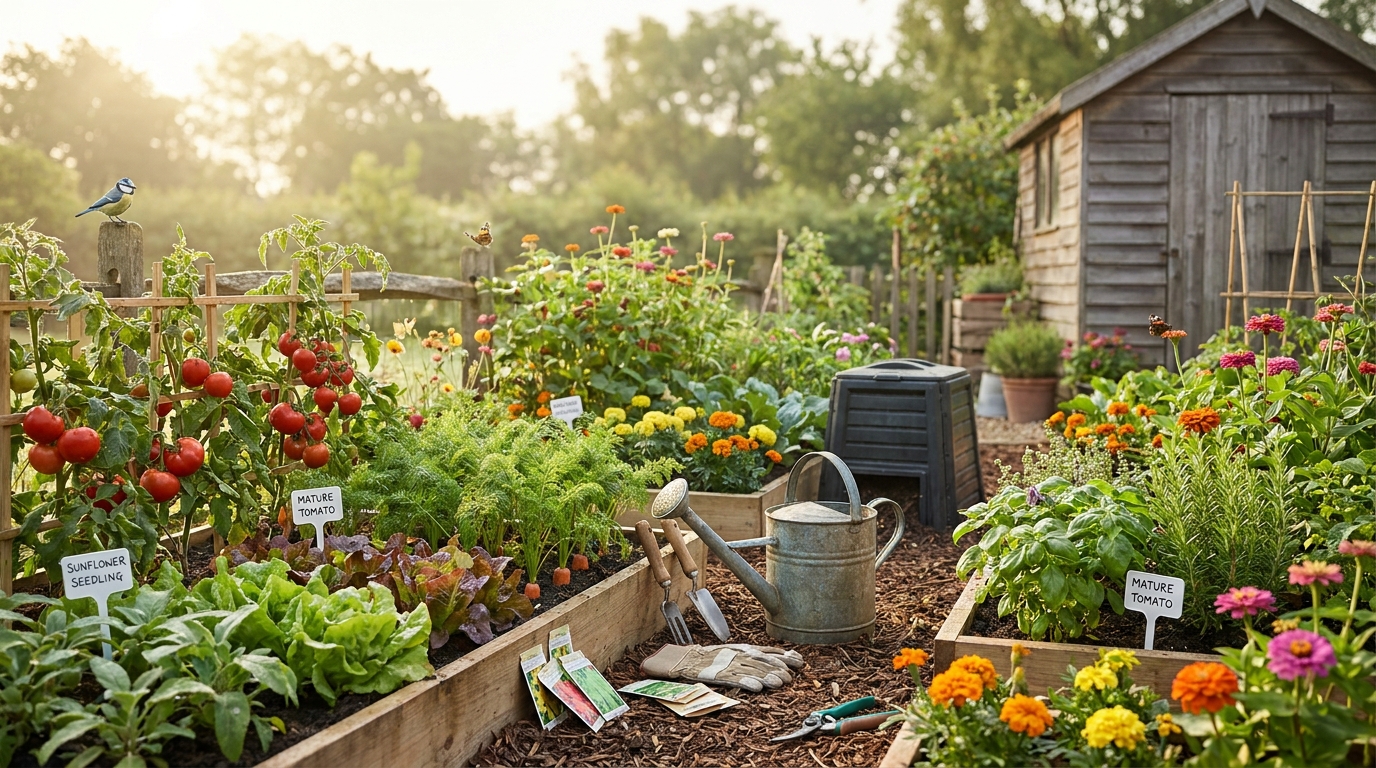
25 practical tips for your first year of gardening, from planning and soil to watering and care, so you skip the mistakes that cost most beginners plants.
Most gardening know-how comes from losing a few plants and working out why. These 25 tips shortcut that process. None of them need special tools or experience, and together they'll prevent the large majority of first-year failures.
Planning
1. Start small
One bed, a few large pots or a single raised bed is plenty for a first season. A small space you look after well beats a big one that gets away from you by July.
2. Watch the sun before you plant
Spend a day noting where the sun falls in the morning, at midday and in the afternoon. "Full sun" means at least six hours of direct sun; most vegetables and many flowers need it.
3. Grow what you'll use
Plant the herbs and vegetables you actually eat, and the flowers you love. It sounds obvious, but it keeps you motivated.
4. Find your frost dates
Your average last spring frost and first autumn frost set the timetable for everything. Look them up for your area and put them in your calendar.
5. Plant near the house
Beds you walk past every day get watered, weeded and picked. The far corner of the garden gets forgotten.
Soil
6. Learn your soil type
Squeeze a handful of moist soil: gritty means sandy, sticky means clay. The RHS soil guide and our soil improvement guide explain what to do with each.
7. Add compost every year
A layer of compost or well-rotted manure each year improves every kind of soil. It's the single most useful thing you can do for your garden.
8. Don't walk on your beds
Treading on soil squashes out the air roots need. Make beds narrow enough to reach the middle from a path, about 1.2 m (4 ft) wide.
9. Use potting mix in pots
Garden soil turns into a hard, airless block in a container. Always use proper potting mix, in pots with drainage holes.
Planting
10. Read the plant label
Check the height, spread, sun and water needs before you buy. Planting by the label avoids most "wrong plant, wrong place" failures.
11. Start with easy crops
Radishes, salad leaves, courgettes, bush beans, potatoes and cherry tomatoes are reliable first crops. See the best vegetables to plant in spring.
12. Harden off indoor-raised plants
Give seedlings a week to ten days of gradually longer spells outdoors before planting them out. It stops them getting scorched and stunted.
13. Give plants room
Space plants for their full-grown size. Crowded plants compete for light and water and get more disease.
14. Sow little and often
Sow salad, radishes and beans in short rows every two to three weeks, rather than all at once, for a steady harvest instead of a glut.
Watering
15. Water deeply, not daily
A thorough soak once or twice a week encourages deep roots. Daily sprinkling keeps roots shallow. See how often to water vegetable plants.
16. Water in the morning, at the base
Morning watering means less is lost to evaporation and leaves dry quickly, which cuts disease.
17. Check before you water
Push a finger into the soil. If it's still damp a few centimetres down, wait. Overwatering kills as many plants as drought.
18. Check pots every day in summer
Containers dry out far faster than the ground; small ones may need water twice a day in hot weather.
Care
19. Mulch bare soil
A layer of compost, bark or straw holds moisture, keeps weeds down and feeds the soil.
20. Weed little and often
Ten minutes with a hoe once a week, before weeds flower, saves hours later. See our guide to common garden weeds.
21. Feed when it's needed, not more
Plants in good soil need little feeding; plants in pots need regular feeding. Too much fertilizer causes soft growth and fewer flowers. See homemade fertilizers that work.
22. Pick often
Harvesting beans, courgettes, cucumbers and cut flowers regularly keeps plants producing. Leave them to set seed and they slow down.
23. Let nature handle most pests
Birds, ladybirds and hoverflies control aphids for free. Hold off on sprays and give predators a week or two to catch up.
Mindset
24. Expect some failures
Every gardener loses plants. Each failure tells you something about your light, soil or timing. Our list of common gardening mistakes shows the usual culprits.
25. Keep a garden notebook
Write down what you sowed, when, and how it did. Next year, it's the most useful gardening book you own.
Where to go next
- Growing on a balcony or indoors? See easy indoor plants and the best windowsill herbs.
- Want flowers that look after themselves? Try our low-maintenance flowers.
- The RHS beginner's guide is another good reference.
Frequently asked questions
What should a beginner plant first?
Radishes, salad leaves and herbs for quick results; cherry tomatoes and courgettes for a summer harvest; marigolds, zinnias and sunflowers for easy colour.
How much time does a small garden take?
A few raised beds or pots need roughly 20–30 minutes a few times a week in summer, mostly watering and picking.
Do I need expensive tools?
No. A spade or fork, a hand trowel, secateurs, a hoe and a watering can cover nearly everything.
More advice in our garden tips.