Homemade Fertilizers: What Works and What Doesn't
Gardens Glow Editorial · 2026-07-25
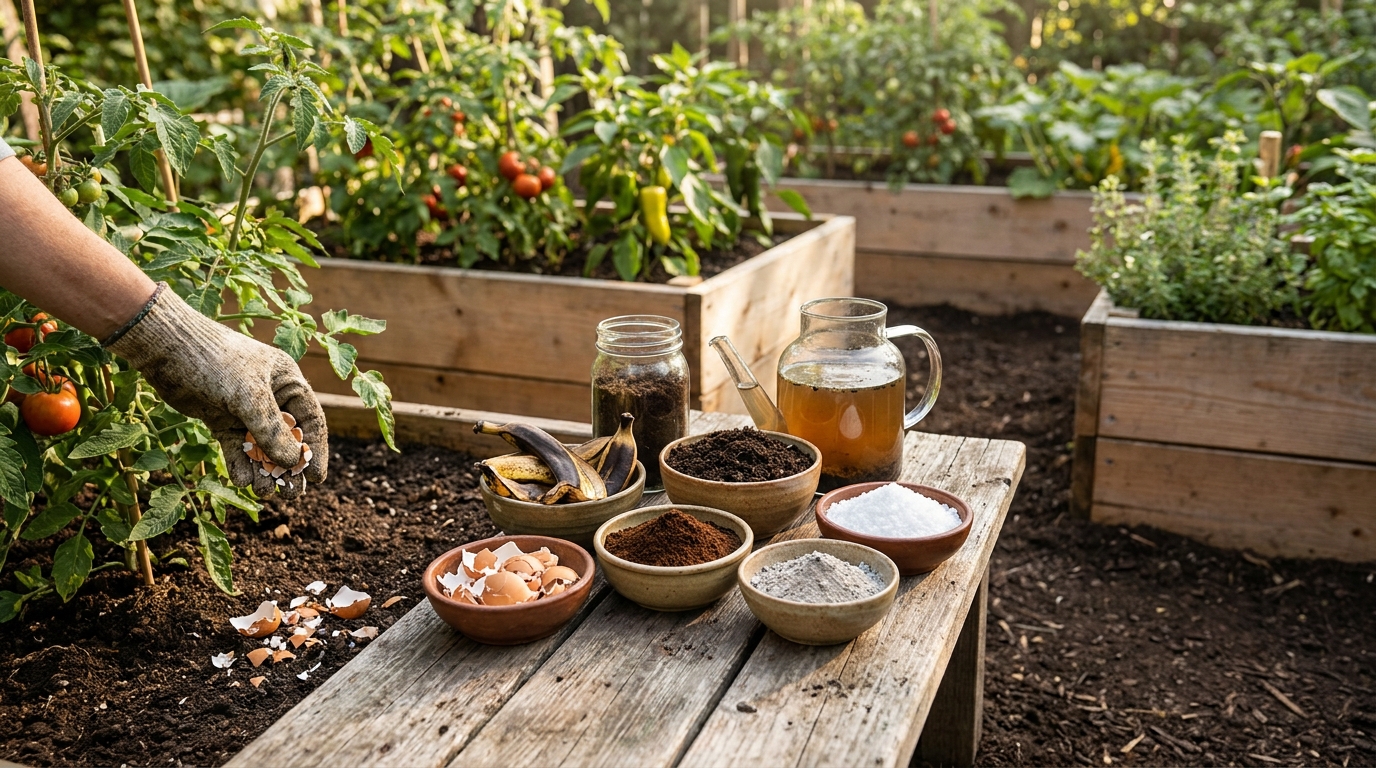
Compost, comfrey and nettle feeds work. Eggshells, coffee grounds and Epsom salt are oversold. An honest guide to homemade fertilizers and when to use them.
Some homemade fertilizers genuinely feed plants. Others are mostly folklore that spreads because it sounds sensible. Compost, comfrey and nettle feeds, grass clippings and well-rotted manure are worth your time. Eggshells, coffee grounds, banana peels and Epsom salt are useful in small ways, but they won't fix the problems they're usually recommended for.
A 60-second guide to plant nutrients
- Nitrogen (N): leafy green growth. Too little: pale, yellowing older leaves. Too much: soft, leafy plants with few flowers.
- Phosphorus (P): roots and early growth. Most garden soils have enough.
- Potassium (K): flowers, fruit and overall toughness. Shortage shows as scorched, yellow leaf edges.
Flowering and fruiting plants such as tomatoes need more potassium once they start flowering; leafy crops like more nitrogen.
The ones that work
Compost
The best all-round soil feeder. It releases nutrients slowly, improves soil structure and feeds soil life. Spread 5–8 cm (2–3 in) on beds each year. It's not a fast "pick-me-up" for a hungry plant, but nothing beats it long term (RHS composting guide). A worm tower makes compost right in the bed.
Comfrey liquid feed
Comfrey leaves are rich in potassium, making them an excellent free feed for tomatoes, peppers, beans and flowers. Pack leaves into a bucket, weigh them down, cover with water and leave for four to six weeks. The liquid smells terrible, so put a lid on. Dilute about one part liquid to ten to fifteen parts water and use it every week or two once plants are flowering. Grow a sterile variety, such as 'Bocking 14', so it doesn't seed everywhere.
Nettle feed
Made the same way as comfrey feed but richer in nitrogen, which makes it a good tonic for leafy crops and young plants. Use young nettles before they flower, wear gloves, and dilute about one part to ten.
Grass clippings
A thin layer of fresh clippings around vegetables releases nitrogen as it rots and keeps moisture in. Keep layers thin, no more than 2–3 cm (an inch), or they turn slimy. Don't use clippings from a lawn treated with weedkiller.
Well-rotted manure
A good source of nutrients and organic matter for hungry crops and roses. It must be well-rotted (at least six months, dark and crumbly). Fresh manure can burn plants and carry pathogens, so don't use it on crops you'll eat soon.
Wood ash
Ash from untreated wood contains potassium and raises soil pH. Use sparingly, a light dusting around fruit bushes or onto the compost heap, and never on alkaline soil or around acid-loving plants. Don't use ash from coal, charcoal briquettes or treated wood.
The ones that are oversold
Coffee grounds
Used grounds contain a little nitrogen, but it isn't released quickly, and they're close to neutral pH after brewing, not strongly acidic as often claimed. They're a good compost ingredient and fine as a thin mulch mixed with other material. Spread thickly on their own, they can form a crust that sheds water. They're not a "nitrogen boost".
Eggshells
Eggshells are mostly calcium carbonate, but they break down extremely slowly, taking years unless they're ground to powder. They won't prevent blossom end rot in tomatoes, which is caused by uneven watering, not a lack of calcium in the soil. Crush them and add them to the compost heap.
Banana peels
Peels contain potassium, released as they rot. Composted, they're useful. Burying whole peels next to plants mostly attracts pests and does little in the short term. Soaking peels in water to make a "banana tea" extracts very little.
Epsom salt
Epsom salt is magnesium sulphate. It helps only if your soil is actually short of magnesium, which isn't common, especially where compost is used regularly (NYBG). Researchers have found claims of bigger yields and sweeter tomatoes aren't backed by evidence (University of Georgia). Overuse can upset the balance of other nutrients. Test your soil before using it.
How to tell what your plant is short of
| Symptom | Possible cause |
|---|---|
| Older, lower leaves turn evenly pale yellow | Nitrogen |
| Yellow between the veins on older leaves, veins stay green | Magnesium |
| Brown, scorched leaf edges; poor flowering and fruit | Potassium |
| Yellow between veins on young leaves | Iron (often because soil is too alkaline) |
Watering problems and disease cause many of the same symptoms, so rule those out first. For tomatoes specifically, see why tomato leaves turn yellow.
When and how to feed
- Feed only when plants are actively growing, usually spring to late summer.
- Water the soil first; feeding dry roots can scorch them.
- Plants in pots need regular feeding because compost runs out of nutrients within weeks. Plants in good garden soil often need little.
- More is not better. Over-feeding gives soft growth, fewer flowers and more pests. It's a common reason roses stop blooming.
Frequently asked questions
What is the best homemade fertilizer?
Compost for the soil, plus comfrey feed for flowering and fruiting plants.
Are coffee grounds good for plants?
In small amounts, mixed into compost or with other mulch, yes. They're not a strong fertilizer.
Do eggshells add calcium to soil?
Very slowly. Ground to powder they help a little over time; whole or crushed shells take years to break down.
Is homemade fertilizer safe for vegetables?
Compost and plant-based feeds are. Avoid fresh manure and manure "teas" on leafy crops close to harvest.
Start with healthy soil; see our soil improvement guide. More in garden tips.