Best Flowers for a Butterfly Garden: 15 Plants That Work
Gardens Glow Editorial · 2026-07-25
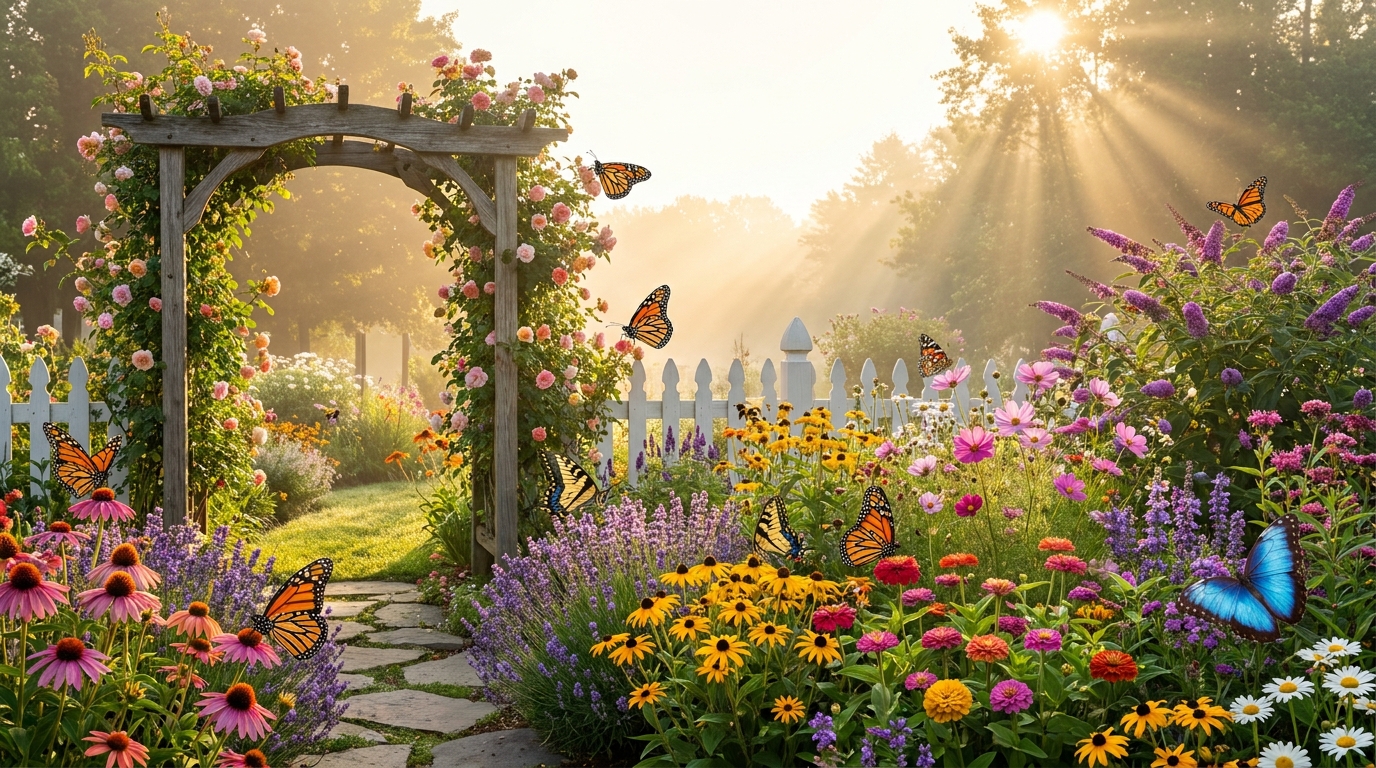
15 nectar flowers and caterpillar host plants that bring butterflies back every year, with bloom times, sun needs and a simple spring-to-autumn plan.
The best flowers for a butterfly garden are open, nectar-rich blooms that flower in sunny spots from spring to autumn: coneflowers, zinnias, Verbena bonariensis, lavender, salvias, asters and sedums are reliable favourites. But flowers alone only feed adult butterflies. To get butterflies that stay, breed and come back next year, you also need a few host plants for their caterpillars. This guide covers both, with a planting plan you can copy.
Nectar plants vs host plants: the step most gardens miss
Adult butterflies drink nectar from many different flowers. Caterpillars are far pickier: most species can eat only a small group of plants, and the female lays her eggs only on those (Penn State Extension). Many popular "butterfly flowers" feed the adults but are useless to the larvae (RHS). A garden with both is a breeding habitat, not just a café.
- Nectar plants feed adult butterflies. Aim for something in flower from early spring to late autumn.
- Host plants feed caterpillars. Expect them to be chewed; that's the point.
15 plants that work, at a glance
| Plant | Role | Flowers | Sun | Good to know |
|---|---|---|---|---|
| Coneflower (Echinacea) | Nectar | Mid-summer to early autumn | Full sun | Drought tolerant once established |
| Zinnia | Nectar | Summer to first frost | Full sun | Easy annual from seed; choose single-flowered types |
| Verbena bonariensis | Nectar | Mid-summer to autumn | Full sun | Tall and airy; self-seeds |
| Lavender | Nectar | Early to mid-summer | Full sun | Needs sharp drainage |
| Salvia | Nectar | Summer to autumn | Full sun | Long season; also feeds hummingbirds |
| Bee balm (Monarda) | Nectar | Mid-summer | Sun to part shade | Space well to limit mildew |
| Asters | Nectar | Late summer to autumn | Full sun | Vital late-season fuel |
| Showy sedum (Hylotelephium) | Nectar | Late summer to autumn | Full sun | Flat flower heads make easy landing pads |
| Black-eyed Susan (Rudbeckia) | Nectar | Summer to autumn | Full sun | Tough and long flowering |
| Joe-Pye weed (Eutrochium) | Nectar | Mid to late summer | Sun to part shade | Tall; likes moist soil |
| Butterfly bush (Buddleja) | Nectar | Summer | Full sun | Invasive in some regions; see below |
| Milkweed (Asclepias) | Host + nectar | Summer | Full sun | Only food for monarch caterpillars |
| Fennel, dill and parsley | Host | Summer | Full sun | Swallowtail caterpillars |
| Stinging nettles | Host | n/a | Sun | Peacock, red admiral, small tortoiseshell |
| Native grasses and bird's-foot trefoil | Host | Summer (trefoil) | Sun | Browns, skippers and common blue |
The best nectar flowers
Coneflower (Echinacea)
Coneflowers are close to a perfect butterfly flower: a broad, sturdy landing platform with nectar held in a raised central cone. They flower for weeks in full sun and shrug off dry spells once established. Leave the seed heads standing in autumn; finches feed on them.
Zinnia
The easiest butterfly flower to grow from seed. Sow after the last frost and you'll have flowers in about two months, continuing until frost if you keep cutting them. Choose single or semi-double varieties, where butterflies can reach the nectar easily; very full double flowers have less to offer. They also make excellent cut flowers (see our cut flowers you can grow from seed).
Verbena bonariensis
Tall, see-through stems topped with small purple clusters that butterflies visit from mid-summer until autumn. Because it's so airy, you can plant it near the front of a border without hiding anything behind it. It self-seeds gently, so you rarely need to buy it twice.
Lavender
Lavender feeds butterflies and bees through early and mid-summer, and its scent is a bonus for you. It needs full sun and free-draining soil, and it hates sitting wet in winter. Our lavender growing guide covers pruning so it doesn't turn woody.
Salvias
Perennial and tender salvias have some of the longest flowering seasons of any garden plant, often from early summer until the first frosts. The tubular flowers also attract hummingbirds where they occur; see our list of flowers that bring hummingbirds.
Bee balm (Monarda)
Shaggy red, pink or purple heads in mid-summer, loved by butterflies and bees. Give each plant space and good air flow to limit powdery mildew, which can coat the leaves in a humid summer.
Asters
Asters matter most at the end of the season, when butterflies are building reserves for hibernation or, in North America, monarchs are fuelling up for migration. A garden that flowers only in June and July leaves them hungry in September.
Showy sedum
Flat, plate-like flower heads give butterflies an easy landing and plenty of tiny flowers to work through. Sedums flower late, look good even in bud and need almost no care in a sunny, well-drained spot.
Black-eyed Susan and Joe-Pye weed
Black-eyed Susans are tough, long-flowering daisies for hot, sunny beds. Joe-Pye weed is a tall North American native for moister ground; its large domed flower heads can be covered in butterflies in late summer. Both are ideal for the back of a border.
A note on butterfly bush (Buddleja)
Buddleja earns its common name, but it self-seeds aggressively and is classed as invasive in several regions, including parts of the US Pacific Northwest. If you grow it, choose a sterile or low-seed variety and cut off the faded flower spikes before they set seed. Elsewhere, the other nectar plants in this list will do the job without the risk.
Host plants for caterpillars
Milkweed (for monarchs)
Monarch caterpillars can only eat milkweed. Butterfly weed (Asclepias tuberosa) suits dry, sunny beds; swamp milkweed (A. incarnata) prefers moist soil. Both also produce nectar for adult butterflies. Where possible, choose a milkweed species native to your area.
Fennel, dill and parsley (for swallowtails)
Swallowtail caterpillars feed on plants in the carrot family. Grow a few extra plants of fennel, dill or parsley as a dedicated "caterpillar patch" so you don't mind when they're stripped.
Stinging nettles (for peacocks, red admirals and tortoiseshells)
In the UK and Europe, a patch of nettles in a sunny corner supports several of the most familiar garden butterflies, including peacock, small tortoiseshell and red admiral (Butterfly Conservation). Shaded nettles under trees are far less useful; the females look for warm, sunny clumps.
Native grasses and bird's-foot trefoil
Letting a strip of lawn grow long gives browns and skippers somewhere to breed, and bird's-foot trefoil feeds the caterpillars of the common blue. It's the cheapest butterfly habitat you can create: simply mow less.
Plan for flowers from spring to autumn
Butterflies are active from the first warm days of spring until late autumn, so the goal is to have something in flower throughout that time (Butterfly Conservation suggests March to November in the UK).
- Spring: early nectar is often the scarcest. Wallflowers, aubrieta, chives and even dandelions in the lawn feed the first butterflies out of hibernation.
- Early to mid-summer: lavender, bee balm, salvias, coneflowers, milkweed.
- Late summer to autumn: asters, sedums, Verbena bonariensis, Joe-Pye weed, late zinnias.
How to design a butterfly-friendly garden
- Choose the sunniest spot you have. Butterflies need warmth to fly and feed. A sheltered, sunny bed out of the wind gets far more visits than an exposed one.
- Plant in groups. Three or more plants of the same kind together are much easier for butterflies to find than single plants dotted around.
- Pick single flowers. Heavily double flowers often have little or no accessible nectar.
- Add basking stones. Flat stones or paving in full sun give butterflies somewhere to warm their wings in the morning.
- Provide a damp patch. Many butterflies drink from wet sand or mud. A shallow dish of damp sand works; our bee water station project also helps.
- Leave some mess. Leaf litter, long grass and a log pile give caterpillars, chrysalises and hibernating adults somewhere to overwinter.
- Skip the pesticides. Insecticides kill caterpillars and adult butterflies alike (RHS).
A small-space butterfly garden in containers
No border? A sunny balcony or patio can still feed butterflies. Use pots at least 30 cm (12 in) across so they don't dry out daily, and combine:
- One tall plant: Verbena bonariensis or a salvia.
- One or two mid-height fillers: zinnias, lavender or a compact coneflower.
- A late flowerer: a dwarf aster or sedum.
- A host plant in its own pot: parsley or dill, which you can share with the caterpillars.
For more easy-care choices, see our list of low-maintenance flowers for beginners, and for a decorative finishing touch, try our mosaic butterfly pathway DIY video.
Mistakes that keep butterflies away
- Planting only nectar flowers, with nowhere for caterpillars to feed.
- Choosing mostly double-flowered varieties.
- A garden that's all colour in June and bare in September.
- Tidying everything away in autumn, including the places butterflies overwinter.
- Using insecticides, even "just on the roses".
Frequently asked questions
Which flower attracts butterflies the most?
It depends on your region and which butterflies live there, but coneflowers, Verbena bonariensis, asters, zinnias and (with care) buddleja are consistently among the most visited. A mix that flowers from spring to autumn will always beat any single "best" plant.
What colours do butterflies prefer?
Butterflies are drawn to purple, pink, red, orange and yellow flowers, especially those with flat or clustered heads they can stand on while feeding.
How long until butterflies find a new garden?
Adults often visit nectar flowers in the first summer. Host plants can take a season or two before females find them and lay eggs.
Will a butterfly garden attract bees too?
Yes. Most good butterfly flowers, including lavender, salvias, asters and bee balm, are also excellent for bees and other pollinators.
Do I need native plants?
Not exclusively, since many non-native flowers provide good nectar. For host plants, though, native species matter: local caterpillars are adapted to local plants.
Explore more ideas in our flower guides.