How to Grow Lavender: Planting, Pruning and Care
Gardens Glow Editorial · 2026-07-25
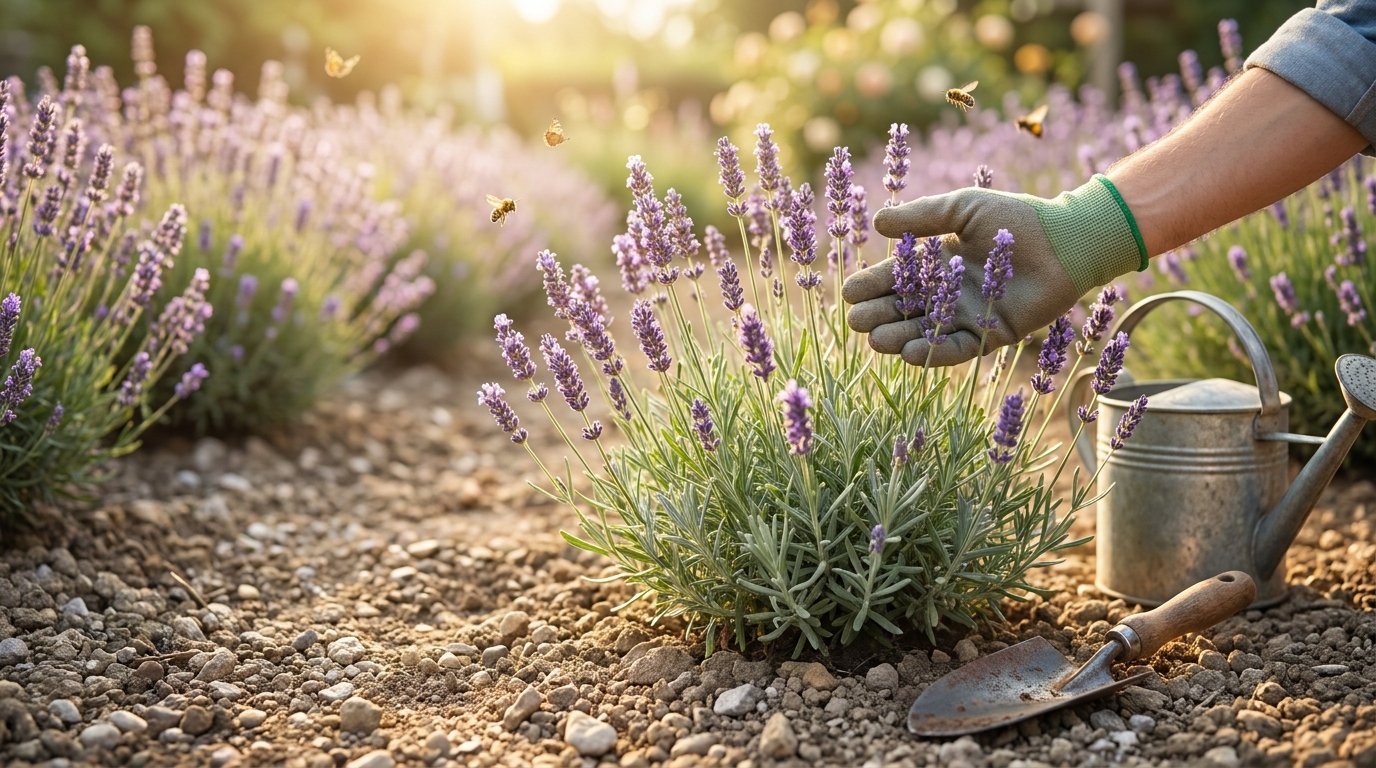
Lavender needs sun, sharp drainage and the right pruning. Which type to choose, how to plant it in beds or pots, when to cut it back, and why it goes woody.
Lavender is easy to grow and hard to keep looking good. It thrives on neglect in the right spot and dies quickly in the wrong one. Almost every problem comes down to three things: not enough sun, too much water in winter, and the wrong pruning. Get those right and a lavender plant will stay compact and flower heavily for many years.
Choose the right type
| Type | Examples | Hardiness | Best for |
|---|---|---|---|
| English lavender (Lavandula angustifolia) | 'Hidcote', 'Munstead' | Hardiest | Hedges, edging, cooking, cold gardens |
| Lavandin (L. × intermedia) | 'Grosso' | Fairly hardy | Larger plants, strongest scent, drying |
| French or Spanish lavender (L. stoechas) | Varieties with "rabbit ear" tufts | Less hardy | Pots, warm and dry gardens |
If winters get cold and wet where you live, start with English lavender. Spanish types are lovely but often don't survive a cold, damp winter in the ground.
Where to plant
- Full sun: at least six hours a day, and more is better. In shade, lavender grows sparse and flowers poorly.
- Sharp drainage: lavender comes from dry Mediterranean hillsides. Its roots rot in soil that stays wet in winter, which is the most common reason plants die.
- Lean soil: it doesn't need rich soil. Chalky and stony soils suit it well.
On heavy clay, plant on a slope, in a raised bed, or in a mound of soil mixed with plenty of grit (RHS).
How to plant
- Plant in spring, once the soil warms up, so roots establish before winter.
- Dig a hole slightly bigger than the pot, and mix horticultural grit into the soil you dug out if drainage is poor.
- Plant at the same depth it was in the pot. Don't bury the stems.
- Water in well.
- For a low hedge, space English lavender about 30 cm (12 in) apart; larger lavandins 45–60 cm (18–24 in).
Mulch with gravel rather than bark or compost. Gravel keeps the base of the plant dry and reflects heat.
Watering and feeding
Water regularly through the first summer while roots establish. After that, lavender in the ground rarely needs watering except in a long drought. Don't feed it: rich soil and fertilizer give floppy, short-lived plants with less scent.
Pruning: the secret to compact plants
Unpruned lavender gets leggy and woody within a few years, splitting open in the middle. The fix is a firm trim every year:
- When: straight after flowering, in late summer.
- How much: cut off all the flower stalks plus about 2–3 cm (an inch) of the leafy growth below them, shaping the plant into a neat mound.
- The one rule: always leave some green leaves on every stem. Lavender rarely regrows from bare, brown wood, so never cut into it.
A light tidy in spring, removing frost-damaged tips, is optional. An old, woody plant that has split can't usually be rescued by hard pruning; it's better to replace it and take cuttings first.
Growing lavender in pots
Lavender does very well in containers, which is the best option for heavy-soil gardens. Use a terracotta pot at least 30 cm (12 in) across, a loam-based potting mix with about a third extra grit, and raise the pot on feet so water drains freely. Pots do need watering in summer, but let the top few centimetres dry out between waterings. In winter, move pots against a house wall, out of the worst rain.
Harvesting and drying
For drying, cut stems when about half the flowers on each spike have opened, in the morning once the dew has dried. Tie them in small bunches and hang upside down somewhere dark, dry and airy for one to two weeks. The same method works for herbs; see how to dry herbs at home. For cooking, use English lavender, and sparingly.
Common problems
- Grey, mushy base or sudden collapse: root rot from wet soil. Improve drainage or move to a pot.
- Leggy, woody plant: not pruned annually, or too much shade or feeding.
- Few flowers: not enough sun, or too much fertilizer.
- Metallic green-and-purple striped beetles (rosemary beetle, in the UK and Europe): pick them off by hand.
Good companions
Lavender is a classic partner for roses, edging the bed in front of them; see our rose growing guide. It suits other sun-loving, drought-tolerant plants such as rosemary, thyme, sage and catmint, and it's one of the best plants for bees and butterflies; see the best flowers for a butterfly garden.
Frequently asked questions
Why is my lavender dying?
Most often, wet soil in winter. Lavender needs sharp drainage. Too much shade or too much fertilizer can also weaken it.
When should I cut back lavender?
Right after it finishes flowering in late summer. Trim off the flower stalks and a little leafy growth, but never cut into bare wood.
How long does lavender live?
Well-pruned English lavender often lasts 10 years or more. Unpruned plants get woody and may need replacing after five or six.
Can lavender grow in shade?
Not well. It survives in light shade but grows sparse and flowers poorly.
More easy, tough plants in our list of low-maintenance flowers and all our flower guides.