15 Common Gardening Mistakes (and How to Avoid Them)
Gardens Glow Editorial · 2026-07-25
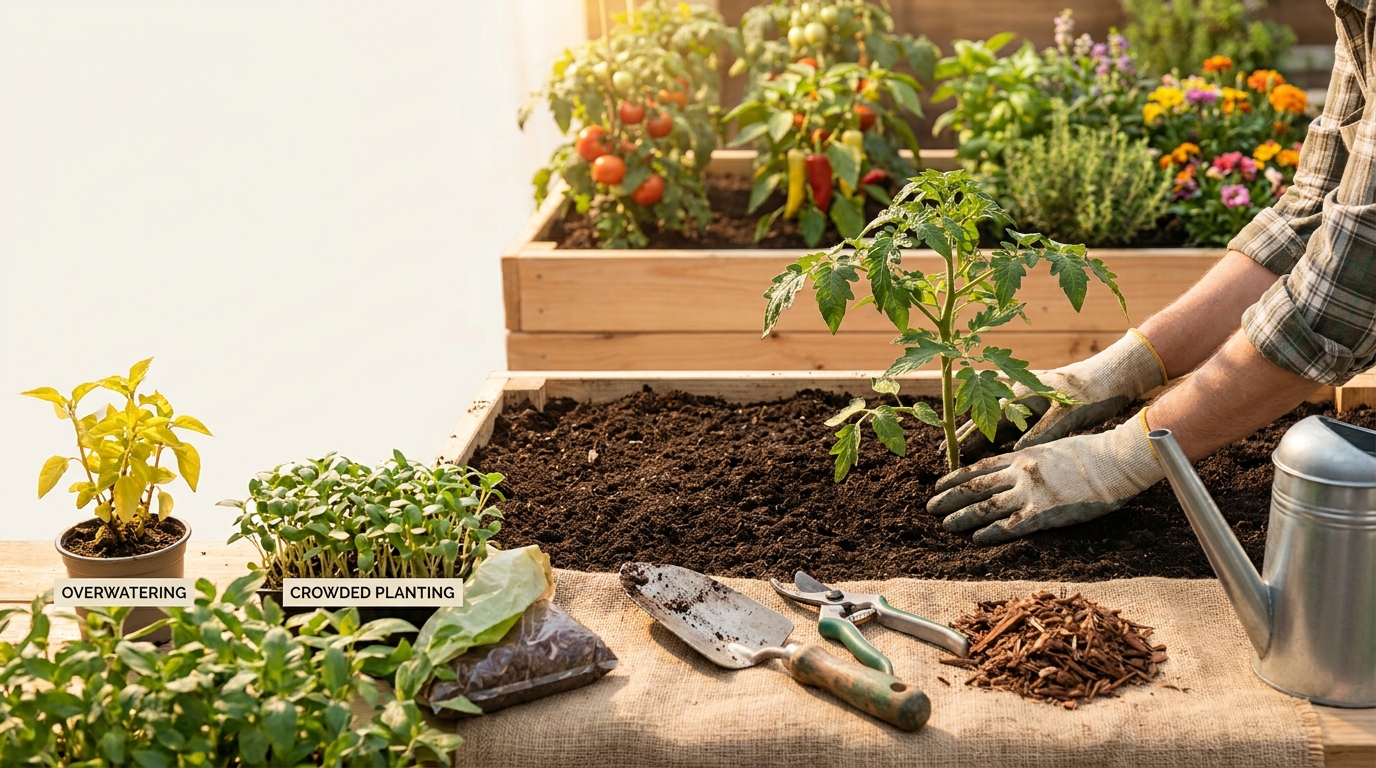
The gardening mistakes that cost beginners the most plants, from shallow watering and planting out too early to over-feeding, and how to avoid every one.
Most failed plants come down to the same short list of mistakes. None of them mean you lack a "green thumb"; they're just things nobody tells you until you've lost a few plants. Here are the fifteen that cause the most trouble, roughly in order of how often they kill plants, with the simple fix for each.
Watering mistakes
1. Watering a little, often
A daily sprinkle wets only the top few centimetres of soil, so roots stay shallow and plants wilt the moment you miss a day. Water less often but deeply, soaking the soil to root depth, and let the surface dry between waterings. Our guide to how often to water explains how much is enough.
2. Overwatering pots and houseplants
The opposite problem indoors. Roots need air as well as water, and constantly wet compost rots them. Check the soil with your finger before watering, and never leave pots standing in water. Learn the warning signs in signs you're overwatering your plants.
3. Watering leaves in the evening
Leaves that stay wet overnight are an open invitation to mildew and leaf spots. Water the soil, not the foliage, and do it in the morning when you can.
Planting mistakes
4. The wrong plant in the wrong place
A sun-loving lavender in shade, or a fern in full sun, will struggle however well you look after it. Before buying, check how many hours of direct sun the spot gets and whether the soil stays wet or dry. Choose plants that suit the spot rather than trying to change the spot to suit the plant.
5. Planting out too early
One warm week in spring isn't summer. Tender plants such as tomatoes, courgettes, basil and dahlias can be killed by a single frost. Find your average last frost date and wait until after it, even when garden centres are selling these plants weeks earlier.
6. Skipping hardening off
Seedlings grown indoors or in a greenhouse get scorched and battered if moved straight outside. Give them seven to ten days outdoors in a sheltered spot during the day before planting them out.
7. Planting too close together
Small plants look lonely when you plant them, so it's tempting to cram them in. Crowded plants compete for water and light and get more disease. Space them according to their full-grown size; fill gaps with annuals for the first year.
8. Sowing seeds too deep or too thickly
A good rule: cover seeds to about twice their own depth. Tiny seeds such as snapdragons or lettuce barely need covering at all. Sow thinly; thinning out dozens of crowded seedlings wastes seed and time.
Soil and feeding mistakes
9. Ignoring the soil
Everything above ground depends on what's below it. Heavy clay, thin sand and compacted soil all hold plants back. Adding organic matter such as compost or well-rotted manure every year fixes most problems over time. Start with our soil improvement guide, and learn your soil type with the RHS soil types guide.
10. Too much fertilizer
More feed isn't better. Excess nitrogen gives soft, leafy growth that attracts aphids and produces fewer flowers and fruit, and too much fertilizer can burn roots. Follow the label, feed only when plants are actively growing, and see our guide to homemade fertilizers that work.
11. Using garden soil in pots
Garden soil packs down into a dense, airless block in a container. Use proper potting mix, and make sure every pot has drainage holes.
12. Leaving soil bare
Bare soil dries out, washes away and fills with weeds. A 5–7 cm (2–3 in) layer of mulch around plants holds moisture, smothers weed seedlings and feeds the soil as it breaks down.
Care mistakes
13. Letting weeds set seed
Ten minutes of hoeing in spring saves hours later. Pull or hoe weeds while they're small and, above all, before they flower. Our guide to common garden weeds explains how to deal with the tough perennial ones.
14. Spraying every bug you see
Most insects in your garden are harmless or helpful. Ladybirds, lacewings, hoverflies and birds control aphids for free, and insecticides kill them along with the pests. Wait a week or two before acting; natural predators usually catch up.
15. Pruning at the wrong time
Some shrubs flower on last year's growth and some on this year's. Prune the first group in spring and you'll cut off this year's flowers. Check before you cut; roses are a classic example, covered in why roses stop blooming.
One bonus habit: keep notes
Write down what you planted, when, and how it did. A simple notebook or phone note turns each season's mistakes into next season's advantage, and you'll stop repeating the same ones.
Frequently asked questions
What is the most common gardening mistake?
Watering the wrong way: shallow, frequent watering outdoors and overwatering indoors.
Why do my new plants die after planting?
Usually not enough water in the first few weeks, planting into cold or waterlogged soil, or skipping hardening off for plants raised indoors.
How can a beginner avoid killing plants?
Start small, choose plants suited to your light and soil, water deeply rather than often, and check plants every few days. Our 25 tips for beginners cover the rest.
The RHS beginner's guide is another good starting point. More in our garden tips.