How to Protect Plants From Extreme Heat
Gardens Glow Editorial · 2026-07-25
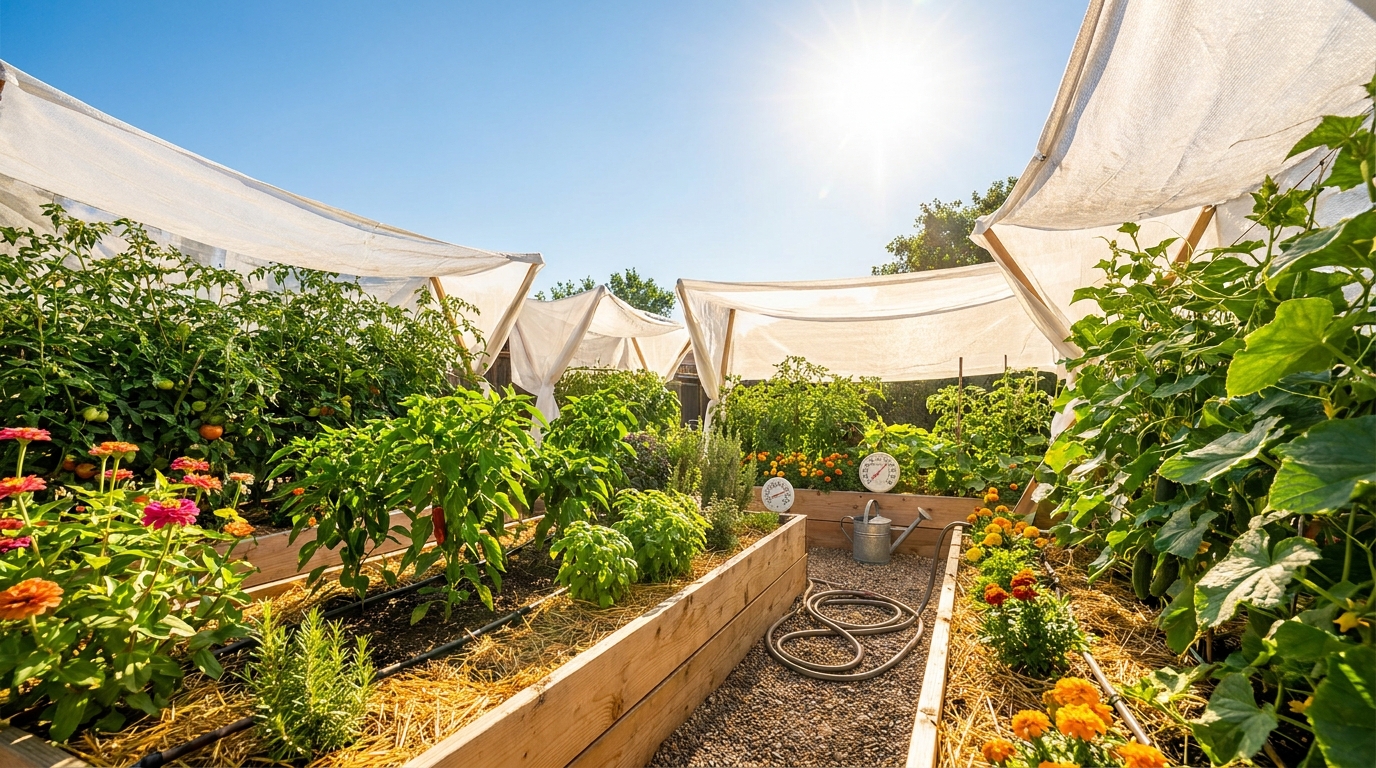
What to do before, during and after a heatwave: deep watering, mulch, shade cloth, moving pots, and the jobs to postpone until temperatures drop.
During a heatwave, plants lose water faster than their roots can replace it. Most garden plants can ride out a few very hot days if the soil around their roots stays moist and they're shaded from the worst of the afternoon sun. The plants most at risk are those in pots, anything planted in the last few weeks, and leafy vegetables.
Signs of heat stress
- Afternoon wilting that recovers by evening is normal; the plant is protecting itself. Wilting that's still there in the morning means it needs water urgently.
- Scorched leaves: pale, bleached or crispy brown patches, often on the side facing the sun.
- Dropped flowers and fruit: tomatoes, peppers and beans stop setting fruit in extreme heat.
- Bolting: lettuce, spinach and cilantro rush to flower and turn bitter.
- Sunscald on fruit: pale, papery patches on tomatoes and peppers exposed to direct sun.
Before the heatwave
- Water deeply the day before, so the whole root zone is moist going in. Deep soil moisture lasts far longer than a surface sprinkle.
- Mulch everything. A 5–7 cm (2–3 in) layer of compost, straw or bark over moist soil keeps roots cooler and cuts evaporation (RHS).
- Move pots into shade, ideally somewhere with morning sun only, and group them together so they shade each other.
- Put up shade for vulnerable crops (see below).
- Pick ripe fruit and vegetables before the heat arrives.
Shade: the most effective protection
Shade cloth that blocks 30–50% of the light suits most vegetables (Penn State Extension). Fix it on hoops, canes or stakes above or to the sunny side of the plants, so it doesn't touch the leaves: cloth lying on plants traps heat and can scorch them. For a short heatwave, an old sheet, garden fleece or even a patio umbrella placed to shade plants during the hottest hours does the job. Focus on the afternoon sun, which is the most damaging.
During the heatwave
- Water early in the morning, deeply and at the base of the plants, so they start the day fully hydrated (University of Kentucky). If you can only water once, morning is best.
- Check containers twice a day. Small pots and hanging baskets can dry out completely by mid-afternoon. A saucer under the pot holds a little reserve during the hottest days.
- Prioritise: new plantings, seedlings, containers and fruiting vegetables first; established trees and shrubs last, since their deep roots cope best.
- Leave lawns to go brown. Grass goes dormant in drought and recovers when rain returns. Water is better spent on plants that won't.
What not to do in the heat
- Don't feed: roots take up less in extreme heat, and fertilizer can scorch stressed plants.
- Don't plant or transplant: new plants can't cope while their roots are establishing. Wait for cooler weather.
- Don't prune heavily: leaves shade stems and fruit. Cutting them off exposes more to the sun.
- Don't water little and often: frequent sprinkles evaporate before they reach the roots.
Vegetables in the heat
Fruiting crops such as tomatoes and peppers may drop flowers when days are above about 32°C (90°F); fruit set usually resumes when it cools. Keep them watered evenly, since swings between dry and wet cause split fruit and blossom end rot. Leafy crops benefit most from shade cloth. See our tomato guide and how often to water vegetable plants for more.
Pots and balconies
Containers on balconies and patios face reflected heat from walls and paving, which can push temperatures far higher than in a bed. Move them away from hot walls, raise them off hot paving, and use the biggest pots you can, which heat up and dry out more slowly. Our guide to watering balcony plants has more tips.
After the heatwave
- Keep watering until rain returns properly; recovery takes moisture.
- Wait before cutting off scorched leaves. They still shade the plant. Remove them once new growth appears.
- Resume feeding lightly once temperatures drop, to help plants recover.
- Re-sow bolted salads; they won't recover. Sow a fresh batch in partial shade.
Planning for hotter summers
- Build up soil organic matter every year; it holds far more water. See our soil improvement guide.
- Install drip irrigation or soaker hoses on a timer.
- Choose heat- and drought-tolerant plants such as lavender, rosemary, salvias, sedums and ornamental grasses for the sunniest spots.
- Plant trees or put up screens that give afternoon shade.
- Set up water butts to collect rain before summer.
Frequently asked questions
Should I water plants in the middle of a hot day?
If a plant is badly wilted, yes: water it at the base straight away. Otherwise, early morning is the most efficient time.
How often should I water during a heatwave?
Garden beds: a deep soak every one to two days. Containers: once or twice daily, checking the soil each time.
Will my plants recover from heat damage?
Most do, if their roots stayed moist. Scorched leaves won't turn green again, but new growth will be healthy.
More seasonal advice in seasonal gardening.