How Often Should You Water Vegetable Plants?
Gardens Glow Editorial · 2026-07-25
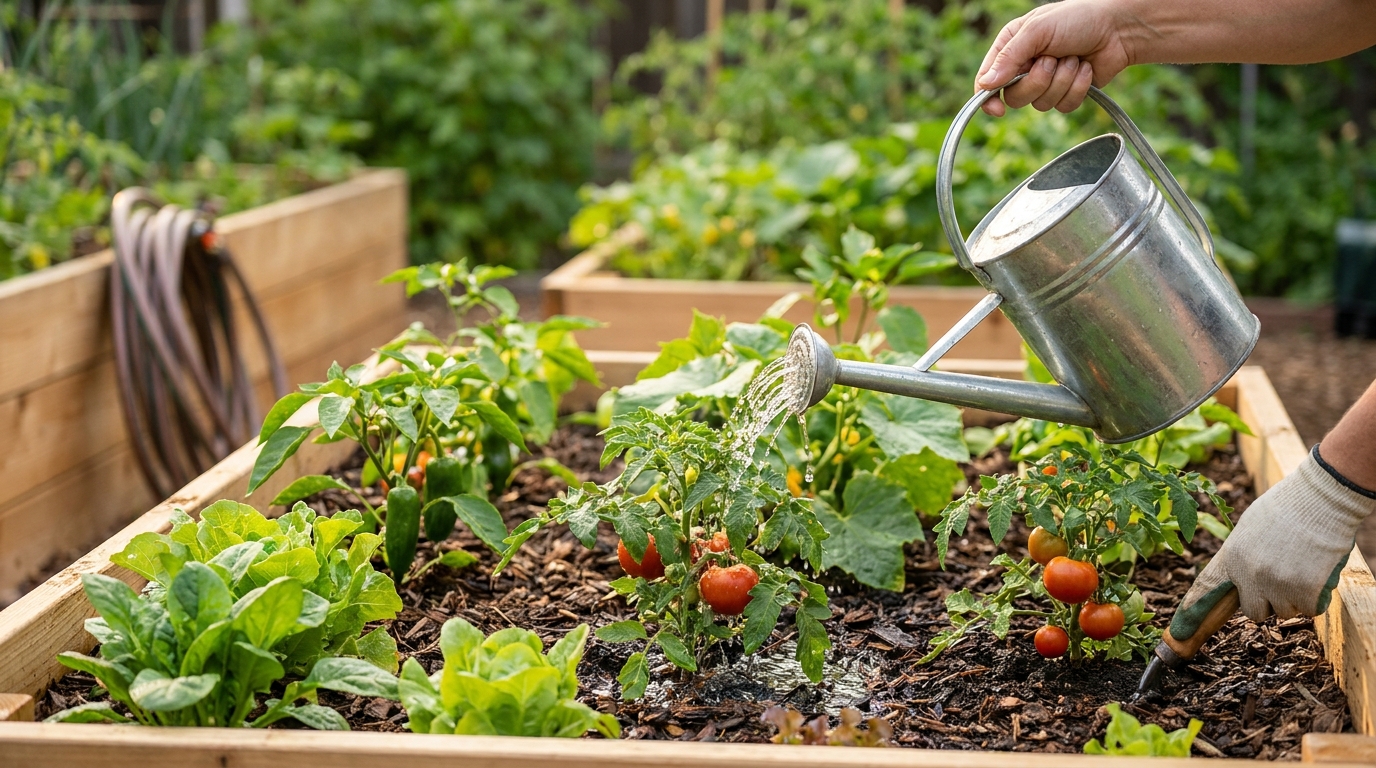
How much water vegetables need, when it matters most for each crop, how to tell when to water, and the methods that waste the least. Includes a crop table.
The short answer: most vegetable plants in the ground need about 2.5 cm (1 inch) of water a week, from rain or watering, given in one or two deep soakings rather than a little every day. Sandy soil, hot weather and containers need more; heavy clay and cool weather need less. The longer answer is that timing matters as much as amount, because each crop has a stage when a dry spell does the most damage.
What "an inch a week" actually means
An inch of water over a square metre is about 25 litres (roughly 0.6 US gallons per square foot). A standard 10-litre watering can therefore covers less than half a square metre with an inch of water. That's why light sprinkling with a can rarely gets past the top few centimetres of soil. A simple rain gauge, or an empty tin can on the ground, shows you how much rain your beds actually received.
Water deeply, not often
Deep watering, enough to moisten the soil 15–20 cm (6–8 in) down, encourages roots to grow deep, where the soil stays moist longer (UGA Extension). Daily light watering keeps roots near the surface, where they dry out fast. After watering, push a trowel into the soil and check how far down it's wet; you'll often be surprised how shallow it is.
How your soil changes the schedule
- Sandy soil drains fast and holds little water: water more often, perhaps every two to three days in hot weather.
- Loam holds water well: once or twice a week is usually enough.
- Clay holds a lot of water but absorbs it slowly: water slowly so it soaks in rather than running off, and less often.
Adding compost improves all three. See our soil improvement guide.
When each crop needs water most
| Crop | Critical stage | What happens if it's dry |
|---|---|---|
| Tomatoes, peppers | Flowering and fruit swelling | Blossom end rot, split fruit, dropped flowers |
| Cucumbers, courgettes, squash | Flowering and fruiting | Bitter or misshapen fruit, poor yield |
| Beans and peas | Flowering and pod set | Flowers drop, few pods |
| Potatoes | Flowering, when tubers form | Small tubers, scab |
| Carrots, beetroot, radish | Root swelling | Woody, split or forked roots |
| Lettuce, spinach, salad leaves | Throughout | Bitter leaves, early bolting |
| Onions, garlic | Bulb swelling (early summer) | Small bulbs |
All seeds and new transplants also need steady moisture until they're established. Read the crop guides for details: tomatoes, cucumbers, carrots and potatoes.
How to tell when to water
- The finger test: push a finger 5 cm (2 in) into the soil. If it's dry at that depth, water.
- Morning wilting: plants that droop in the afternoon heat but recover by evening are usually fine. Plants that are wilted first thing in the morning need water now.
- Soil colour and feel: dry soil is paler and crumbles; moist soil holds together when squeezed.
The best ways to water
- Soaker hoses and drip lines deliver water slowly to the roots, waste almost nothing to evaporation and keep leaves dry. On a tap timer, they're the most reliable option for a vegetable plot.
- A watering can or hose at the base of each plant is fine for small beds. Water slowly so it soaks in.
- Sprinklers waste water to evaporation and wet the leaves, which spreads disease. Use them only for seedbeds and newly sown lawns.
Water in the early morning when you can; less is lost to evaporation, and leaves dry quickly during the day (RHS). Evening is the next best choice.
Mulch: the easiest way to water less
A 5–7 cm (2–3 in) layer of straw, compost, grass clippings or leaf mould on moist soil cuts evaporation dramatically, keeps roots cool and stops soil crusting (RHS mulching guide). Apply it after a good soaking, never on dry soil.
Containers and raised beds
Pots, grow bags and raised beds dry out much faster than open ground. In summer, check containers every day and water until it runs out of the bottom; in a heatwave, twice a day. Bigger containers hold more water and need watering less often. For balcony setups, see how to water balcony plants.
Watering in a heatwave
Water deeply early in the morning, mulch everything, and give extra shade to leafy crops. Don't feed during extreme heat. Our guide to protecting plants from extreme heat covers shade cloth and other tactics.
Signs you're overwatering
Yes, vegetables can get too much water too. Yellowing lower leaves, constantly soggy soil, slow growth and rotting roots or stems all suggest the soil isn't draining. Water less often and improve drainage with organic matter or raised beds.
Frequently asked questions
Should I water my vegetable garden every day?
Not in the ground. Water deeply one to three times a week depending on soil and weather. Containers often do need daily watering in summer.
Is it OK to water vegetables in the evening?
Yes, though morning is better. If you water in the evening, water the soil and keep the leaves dry.
How long should I run a soaker hose?
Run it, then dig down to check: you want the soil moist to about 15 cm (6 in). Often that's 30–60 minutes, but it varies with water pressure and soil.
Does rain count as watering?
Yes, if there's enough of it. A light shower may not wet the soil below the surface; check with your finger or a rain gauge.
More in our vegetable growing guides.