Why Are My Tomato Leaves Turning Yellow? 8 Causes
Gardens Glow Editorial · 2026-07-25
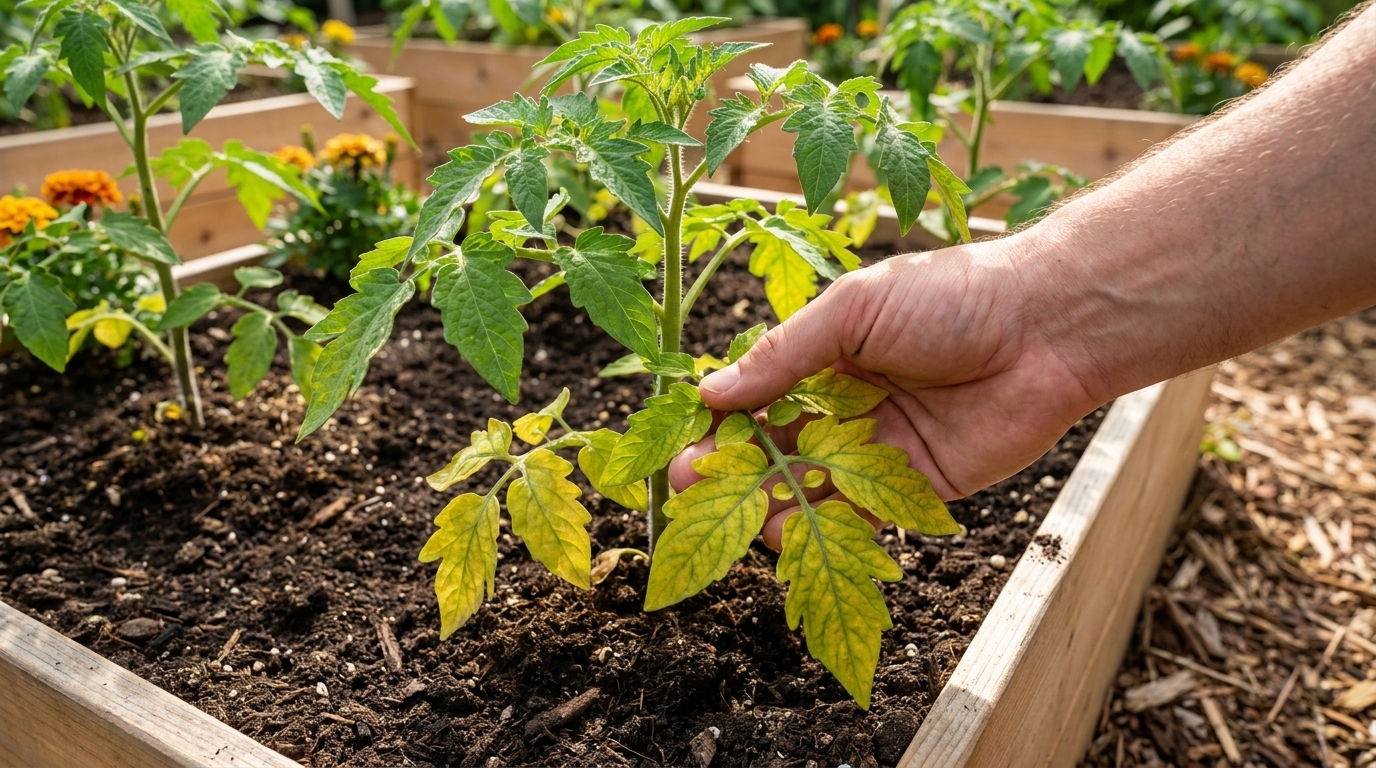
Match the yellowing pattern on your tomato plant to its cause, from harmless old leaves to hunger, watering problems, blight and wilt, and fix it fast.
Yellow leaves on a tomato plant can mean anything from "completely normal" to "this plant has a disease". The pattern tells you which. Where the yellowing starts (old or new leaves), what it looks like (even yellow, spots, or yellow between the veins) and how fast it spreads point to the cause. Start with the table, then read the section that matches.
Quick diagnosis
| What you see | Likely cause |
|---|---|
| A few of the lowest leaves yellow late in the season; rest of plant fine | 1. Normal ageing |
| Older leaves evenly pale yellow, moving upward; slow growth | 2. Nitrogen shortage |
| Yellow, droopy leaves in soil that's always wet | 3. Overwatering |
| Yellowing and crisp edges after dry spells; wilting | 4. Underwatering |
| Yellowing right after planting out | 5. Transplant shock or cold |
| Yellow between the veins of older leaves, veins stay green | 6. Magnesium shortage |
| Brown spots with yellow halos on lower leaves | 7. Leaf spot diseases or blight |
| Yellowing on one side of a leaf or one stem; wilting in the heat | 8. Fusarium or verticillium wilt |
1. Normal ageing of lower leaves
The oldest leaves at the bottom of the plant get shaded as the plant grows and naturally yellow and die, especially from mid-summer on. If new growth and fruit look healthy, simply remove them. Taking off leaves that touch the soil also helps prevent disease.
2. Nitrogen shortage
Hungry plants move nitrogen from old leaves to new growth, so yellowing starts at the bottom and works up, with the whole leaf turning pale. It's most common in containers and grow bags, where compost runs out of nutrients within weeks. Fix: feed with a balanced liquid fertilizer, then switch to a high-potassium tomato feed once fruit sets. A nettle feed works too; see homemade fertilizers that work.
3. Overwatering or poor drainage
Waterlogged roots can't take up nutrients, so leaves yellow and droop even though the soil is wet. Fix: let the soil dry a little between waterings, check that pots have drainage holes and empty any standing saucers.
4. Underwatering
Dry spells cause yellowing and crisp, brown leaf edges, and often split fruit and blossom end rot as well. Fix: water deeply and consistently and mulch the soil. See how often to water vegetable plants.
5. Transplant shock or cold
Plants put out too early, or into cold soil, often yellow or turn purplish for a week or two. Fix: usually none needed; they recover once the weather warms. Next year, harden plants off and wait until nights stay above about 10°C (50°F).
6. Magnesium shortage
Yellow patches between the veins of older leaves, with the veins staying green. It's most common in pots fed heavily with high-potassium tomato feed, since excess potassium makes magnesium harder to take up. Fix: this is the one case where Epsom salt (magnesium sulphate) is useful. A foliar spray at about 20 g per litre (about a tablespoon per US quart) every couple of weeks corrects it. Epsom salt won't help other yellowing problems and doesn't prevent blossom end rot (NYBG).
7. Leaf spot diseases and blight
- Early blight: brown spots with concentric rings like a target, often with a yellow halo, starting on the lowest leaves.
- Septoria leaf spot: many small round spots with dark borders and pale centres on lower leaves.
- Late blight: large, fast-spreading brown patches on leaves and stems in warm, wet weather, followed by rotting fruit (RHS).
Fix: remove affected leaves as soon as you see them, and dispose of them away from the compost. Mulch to stop soil splashing onto the leaves, water at the base in the morning, and give plants space for air flow. Late blight can't be stopped once it takes hold; remove and dispose of the plant, pick any healthy fruit, and grow resistant varieties next year.
8. Fusarium and verticillium wilt
Soil-borne fungi that block the plant's water-carrying vessels. Leaves yellow, often on one side of the plant or one side of a leaf first, and plants wilt in the heat of the day even when watered. Cut a stem lengthways: brown streaks inside point to wilt. Fix: there's no cure. Remove the plant, don't grow tomatoes, potatoes, peppers or aubergines in that spot for several years, and choose resistant varieties (often marked "V" and "F" on seed packets).
Don't forget pests
Fine yellow speckling with tiny webs under the leaves, especially in hot, dry weather, is likely spider mite. Clouds of tiny white insects flying up when you brush the plant are whitefly. Spray mites off with water, raise humidity and, if needed, use insecticidal soap; yellow sticky traps help with whitefly in greenhouses.
Homemade remedies: what helps and what doesn't
- Helps: compost, comfrey and nettle feeds for hungry plants; mulching; removing infected leaves early; Epsom salt for a confirmed magnesium shortage.
- Doesn't help: eggshells or Epsom salt for blossom end rot; baking soda sprays for blight (they don't cure it); extra watering for a plant that's already waterlogged.
Prevention checklist
- Plant in sun, in soil enriched with compost, after the risk of cold nights.
- Water deeply and evenly; mulch once the soil is warm.
- Feed regularly in containers, switching to tomato feed at flowering.
- Remove leaves touching the soil.
- Rotate where you grow tomatoes each year.
For the full growing guide, read how to grow tomatoes, and for hot summers, protecting plants from extreme heat.
Frequently asked questions
Should I remove yellow leaves from tomato plants?
Yes. Remove yellow and spotted leaves, especially at the bottom of the plant, to improve air flow and slow disease.
Can yellow tomato leaves turn green again?
Usually not. Once you fix the cause, new growth will be healthy, but leaves that have yellowed rarely recover.
Is it normal for tomato plants to have some yellow leaves?
Yes, a few at the very bottom late in the season. Yellowing that spreads quickly or appears on new growth needs attention.
More vegetable help in our vegetable guides.