How to Grow Roses: Planting, Pruning and Care
Gardens Glow Editorial · 2026-09-01
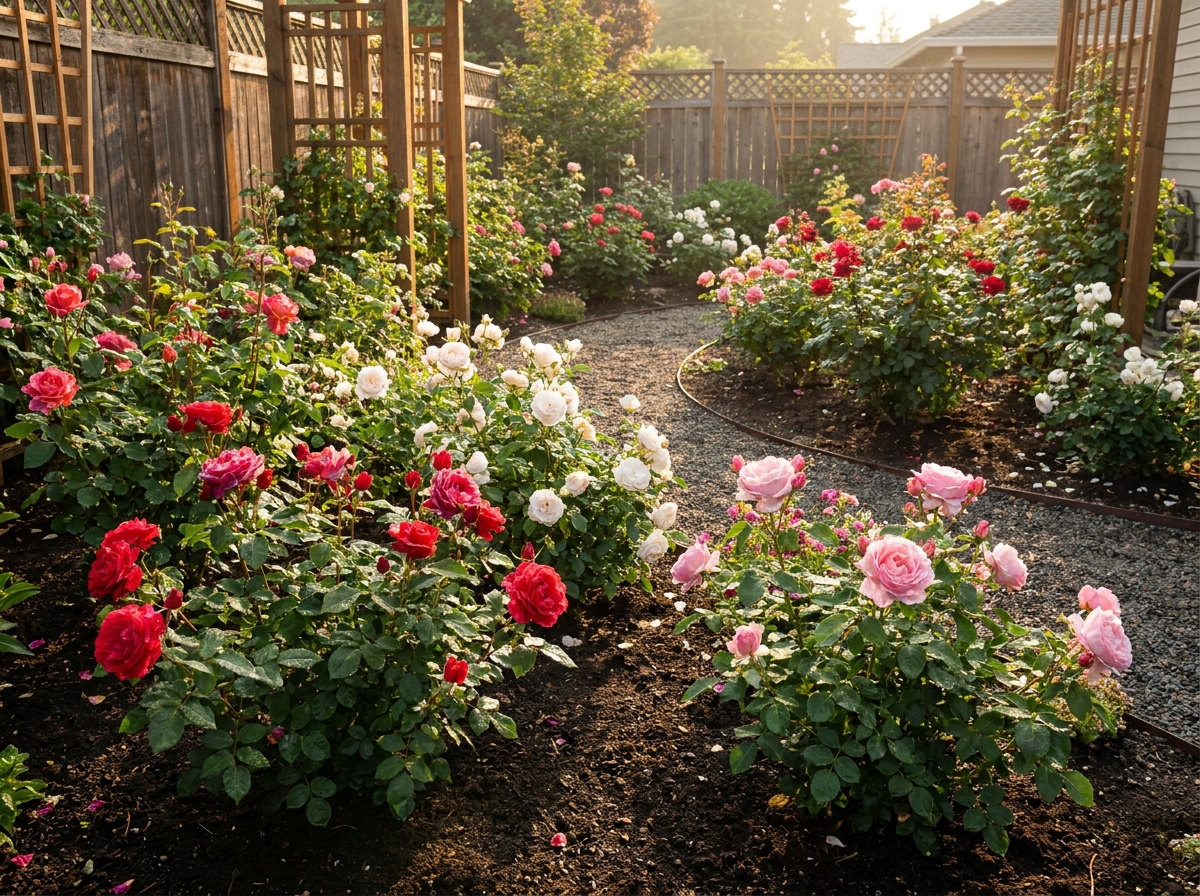
Choose the right type, plant it properly, then feed, water and prune at the right times. A plain-English rose guide, plus fixes for black spot and aphids.
Roses have a reputation for being fussy, but most of that comes from three avoidable mistakes: too little sun, the wrong variety for the spot, and pruning at the wrong time. Get those right and a modern disease-resistant rose is no harder to grow than any other shrub.
Pick the right type of rose for the job
| Type | What it does | Best for |
|---|---|---|
| Hybrid tea | One large, classic bloom per stem | Cutting, formal beds |
| Floribunda | Clusters of smaller flowers, repeat flowering | Long-lasting colour in borders |
| Shrub (including English roses) | Bushy, often scented, usually tough | Mixed borders, beginners |
| Climber | Stiff stems trained on a wall or fence; repeat flowers | Walls, arches, obelisks |
| Rambler | Vigorous, flexible stems; one big flush of flowers | Pergolas, growing into trees |
| Patio and groundcover | Compact or spreading | Pots, slopes, edging |
If you're new to roses, start with a shrub rose or floribunda with a reputation for disease resistance. In the UK, the RHS Award of Garden Merit is a useful shortcut; elsewhere, look for local rose society trial results. A tough variety saves you far more work than any spray.
Where to plant
- Sun: at least five to six hours of direct sun a day. Morning sun is especially useful because it dries dew off the leaves, which cuts down on black spot.
- Air: an open spot with some air movement, not jammed against a hedge.
- Soil: roses like moisture-retentive but well-drained soil, slightly acidic to neutral. Heavy clay is fine once it's improved with organic matter; pure sand needs plenty of compost to hold water. Our soil improvement guide covers how.
- Avoid old rose beds: planting a new rose where another grew for years often leads to weak growth, a problem known as rose replant disease. Either choose a fresh spot or replace a generous hole's worth of soil (RHS).
When and how to plant
Bare-root roses are sold dormant, without soil, from late autumn to early spring. They're cheaper, there's a wider choice of varieties, and they establish well. Container roses can go in at any time the ground isn't frozen or baked dry, though spring and autumn are easiest.
- Soak bare-root roses in a bucket of water for an hour or two before planting.
- Dig a hole about twice as wide as the roots and deep enough for them to spread out without bending.
- Loosen the soil at the bottom of the hole and mix some well-rotted compost or manure into the soil you dug out.
- Set the rose so the graft union (the knobbly point where the stems join the rootstock) sits at or just below soil level. In very cold climates, go a few centimetres deeper for protection.
- Backfill, firm gently with your foot, and water in thoroughly, even if it's raining.
Space most bush roses about 60 cm (2 ft) apart; larger shrub roses need 90 cm (3 ft) or more.
Watering
New roses need regular watering through their first growing season, about once or twice a week in dry weather, enough to soak the root zone. Established roses are surprisingly drought tolerant but flower better with a deep soak every week or so during long dry spells. Water the soil, not the leaves, and do it in the morning. Roses in pots dry out much faster and may need water daily in summer.
Feeding and mulching
Feed with a rose or balanced general fertilizer in spring as new growth starts, and again after the first flush of flowers for repeat-flowering types. Stop feeding by mid-summer: late feeding pushes out soft growth that gets damaged in winter. If you prefer gentler feeds, our guide to homemade fertilizers explains which ones actually help.
After feeding in spring, spread 5–7 cm (2–3 in) of compost, bark or well-rotted manure around the plant, keeping it a hand's width away from the stems. Mulch holds moisture, keeps roots cool and stops rain splashing black spot spores up onto the leaves.
Pruning without the panic
Most bush and shrub roses are pruned in late winter or early spring, just as the buds start to swell. The exact cuts depend on the type, but the same order of work applies to all of them (RHS pruning guide):
- Remove anything dead, damaged or diseased, cutting back to healthy wood.
- Take out thin, weak stems and any that cross through the middle and rub.
- Shorten what's left, cutting about 5 mm above an outward-facing bud with a slanting cut.
- Hybrid teas: cut main stems back hard, to roughly 15 cm (6 in) from the ground.
- Floribundas: a little lighter, to around 20–25 cm (8–10 in).
- Shrub roses: reduce by about a third and remove one or two of the oldest stems at the base.
- Climbers: train the main stems as close to horizontal as you can, which makes them flower all along their length, and shorten the side shoots to two or three buds.
- Ramblers: prune after flowering, not in winter, by removing some of the oldest stems.
Deadhead repeat-flowering roses through summer by snipping faded flowers back to the next leaf. Stop in early autumn if you want hips for birds and winter colour. If your roses grow well but flower poorly, read why roses stop blooming.
Common problems
Black spot
Dark spots with fringed edges on the leaves, which then yellow and drop. It spreads by rain splash. Pick off affected leaves, clear fallen leaves in autumn, mulch, water at the base and, for the long term, grow resistant varieties.
Powdery mildew
A white, dusty coating on young leaves and buds, worst when roots are dry and the air is still. Water regularly in dry spells and give plants space.
Aphids
Clusters of small green or pink insects on shoot tips and buds in spring. Squash them by hand or spray off with water. Blue tits, ladybirds and hoverfly larvae usually bring them under control within a few weeks if you don't spray insecticide.
Rust
Orange spots under the leaves in summer. Remove affected leaves and improve air flow; it's rarely serious on vigorous plants.
Roses in pots
Patio roses and smaller shrub roses do well in containers at least 40 cm (16 in) deep and wide. Use a loam-based potting mix, which holds water and nutrients better than lightweight multipurpose compost, and feed every two weeks from spring to mid-summer. Expect to water daily in hot weather.
Frequently asked questions
How much sun do roses need?
At least five to six hours of direct sun. A few varieties, mostly some climbers and ramblers, cope with less, but they'll flower less.
When is the best time to plant roses?
Bare-root roses from late autumn to early spring while dormant; container roses any time the soil isn't frozen or very dry.
Do roses need a lot of fertilizer?
No. Two feeds a year (spring and after the first flush) plus an annual mulch is enough for most garden roses.
Can I grow roses next to other plants?
Yes. Low perennials such as catmint, lavender and hardy geraniums suit roses well, as long as they don't crowd the base. See our lavender guide for a classic pairing.
Browse more in our flower growing guides.