15 Low-Maintenance Flowers Perfect for Beginners
Gardens Glow Editorial · 2026-07-25
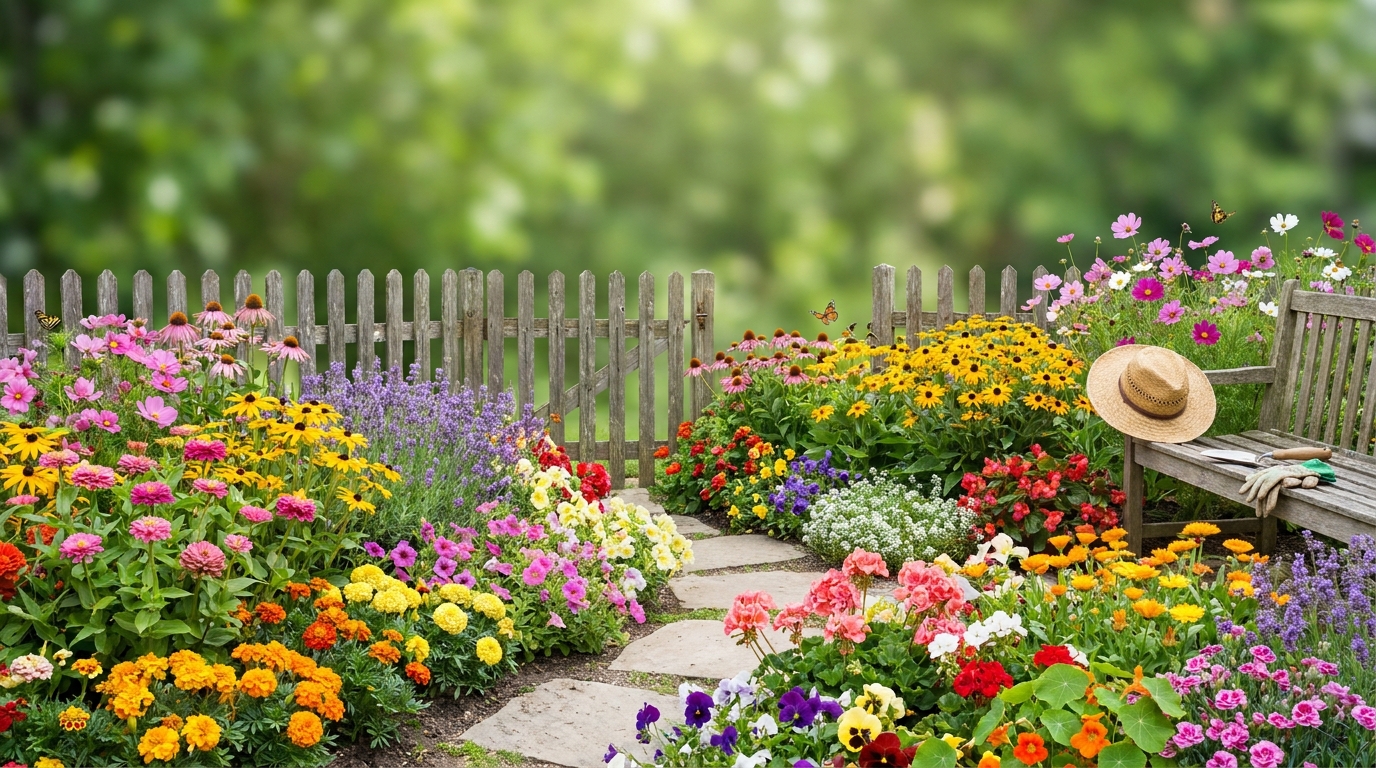
Fifteen flowers that need little care once planted, grouped by sun, shade and pots, with honest notes on what each one still needs from you.
"Low maintenance" doesn't mean no maintenance. It means a plant that copes with imperfect watering, doesn't need constant feeding or spraying, and keeps flowering without fuss. The fifteen below fit that description when they're planted in the right spot. Each comes with an honest note on the little it does still need.
The 15 at a glance
| Flower | Type | Sun | Still needs |
|---|---|---|---|
| Marigold | Annual | Full sun | Occasional deadheading |
| Zinnia | Annual | Full sun | Space for air flow |
| Sunflower | Annual | Full sun | Stakes for tall types |
| Cosmos | Annual | Full sun | Nothing; avoid rich soil |
| Nasturtium | Annual | Sun to part shade | Nothing; thrives in poor soil |
| Calibrachoa or spreading petunias | Annual | Full sun | Regular feeding in pots |
| Black-eyed Susan | Perennial | Full sun | Divide every few years |
| Coneflower | Perennial | Full sun | Nothing once established |
| Daylily | Perennial | Sun to part shade | Divide when crowded |
| Lavender | Shrubby perennial | Full sun | One trim a year |
| Dianthus (pinks) | Perennial | Full sun | Good drainage |
| Hosta | Perennial | Shade | Slug protection in wet areas |
| Begonia | Annual or tender | Part shade | Don't overwater |
| Pansy and viola | Annual or short-lived | Sun to part shade | Deadheading |
| Forget-me-not | Biennial, self-seeds | Part shade | Pull extras after flowering |
Easy annuals for quick colour
1. Marigolds
Bright, tough and quick from seed. French marigolds stay compact; African types grow taller. They cope with heat and poor soil.
2. Zinnias
Heat-loving, long-flowering and great for cutting and butterflies. Give them space so air can move between plants, which keeps mildew away.
3. Sunflowers
Almost guaranteed success from seed. Dwarf varieties need no staking at all. See how to grow sunflowers.
4. Cosmos
Airy flowers from mid-summer to frost. Cosmos actually does better without feeding: rich soil gives tall, leafy plants with fewer flowers.
5. Nasturtiums
Sow the large seeds straight into the ground and forget them. They flower best in poor, dry soil, and the leaves and flowers are edible.
6. Calibrachoa and spreading petunias
Ordinary petunias need regular deadheading, but many modern spreading petunias and calibrachoa ("million bells") are self-cleaning: old flowers drop off on their own. In pots and baskets they do need regular watering and a weekly liquid feed.
Tough perennials that come back every year
7. Black-eyed Susan (Rudbeckia)
Golden daisies from mid-summer into autumn, tolerant of heat and most soils. Divide clumps every three or four years to keep them vigorous.
8. Coneflower (Echinacea)
Drought tolerant once established and loved by bees and butterflies. Leave the seed heads in autumn for birds. See our butterfly garden guide.
9. Daylilies
Each flower lasts a day, but a clump produces them for weeks. Daylilies grow almost anywhere, from sun to light shade and clay to sand.
10. Lavender
Thrives on neglect in a sunny, well-drained spot. The one job is a trim after flowering. See how to grow lavender.
11. Dianthus (pinks)
Compact, clove-scented flowers with grey-green leaves. They like sun and sharp drainage and suit the front of a border or a gravel garden.
For shade
12. Hostas
Grown for their leaves, with spikes of lilac or white flowers in summer, hostas are some of the toughest shade plants there are. Their only real weakness is slugs and snails. In a slug-prone garden, grow them in pots or choose thick-leaved varieties, which are less often eaten.
13. Begonias
Flower all summer in part shade, in beds or pots. Their most common problem is overwatering; let the surface dry between waterings.
14. Forget-me-nots
Clouds of small blue flowers in spring. They self-seed freely, so after the first year you'll rarely need to sow them again. Pull out unwanted seedlings and spent plants after flowering.
15. Pansies and violas
Cheerful, cold-tolerant flowers for autumn, winter and spring colour, in pots or at the front of beds. Deadhead regularly and they'll flower for months.
How to keep any flower low-maintenance
- Right plant, right place: match each plant's sun and soil needs. This prevents more problems than anything else.
- Prepare the soil once, properly. See our soil improvement guide.
- Mulch to cut down weeding and watering.
- Choose tested varieties. In the UK, the RHS Award of Garden Merit marks plants that performed reliably in trials.
- Plant in groups rather than dotting single plants around; it looks better and is easier to look after.
On a budget? Many of these are easy from seed or division; see our budget gardening ideas. For cutting, see 7 cut flowers to grow from seed.
Frequently asked questions
What is the easiest flower to grow for beginners?
Nasturtiums, marigolds and sunflowers from seed; daylilies and coneflowers as perennials.
Which low-maintenance flowers grow in shade?
Hostas, begonias, forget-me-nots and violas, plus daylilies in light shade.
Which flowers come back every year?
Perennials: black-eyed Susan, coneflower, daylilies, lavender, dianthus and hostas. Forget-me-nots and nasturtiums often return by self-seeding.
More flower guides in our flowers collection.