How to Grow Potatoes in Grow Bags
Gardens Glow Editorial · 2026-07-29
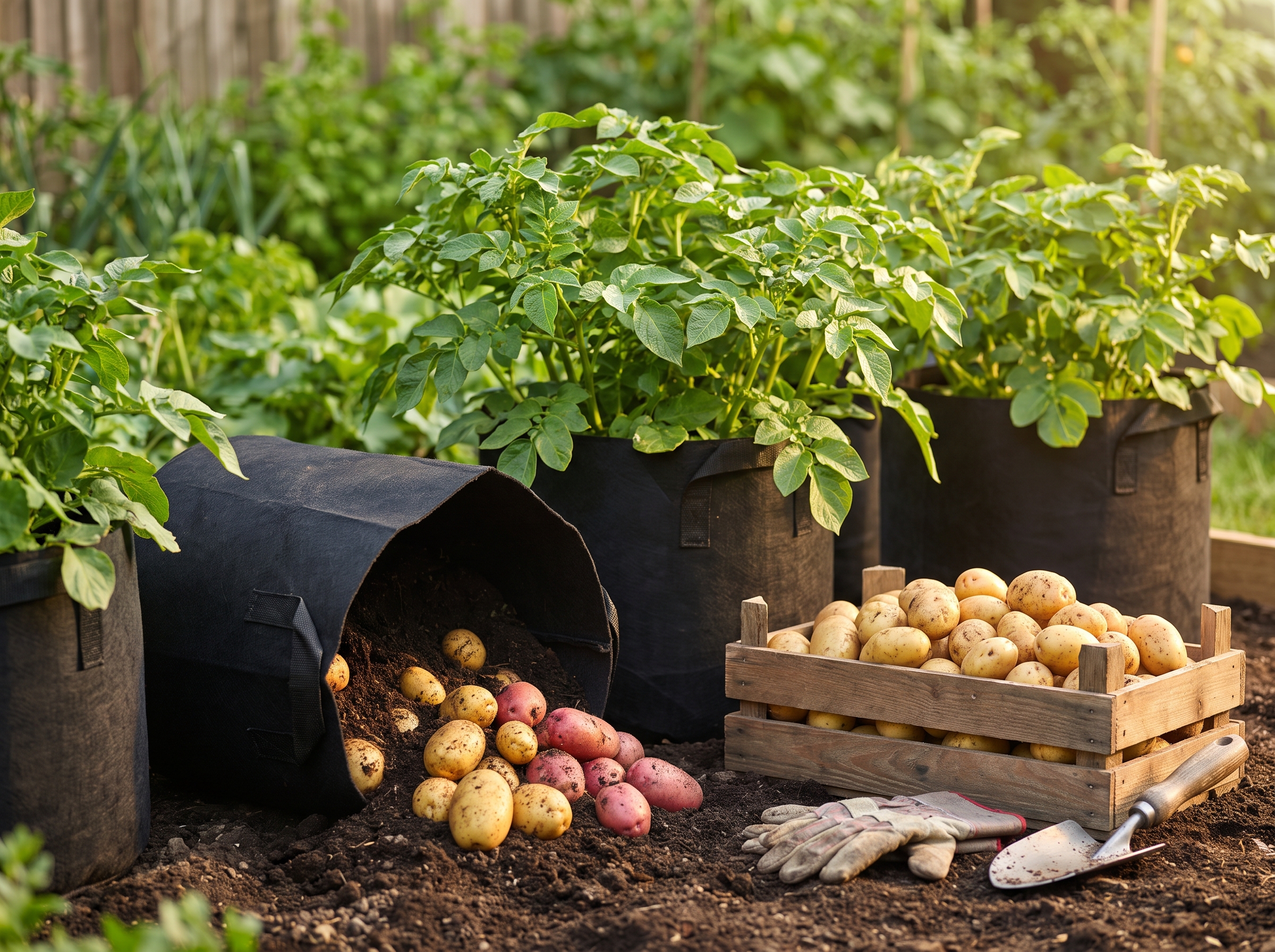
Grow potatoes on a patio or balcony: the right bag size and variety, chitting, planting and earthing up, watering, and when to tip out the harvest.
Potatoes are one of the most rewarding crops to grow in bags. There's no digging, no damaged tubers at harvest, and you can grow them on a patio, a balcony or a driveway. One 40-litre bag planted with three seed potatoes typically gives a few kilograms of new potatoes, and the first harvest is the most satisfying moment in vegetable growing: you just tip the bag out.
What you'll need
- Grow bags: fabric potato bags or sturdy plastic bags with drainage holes, at least 35–40 litres (around 10 US gallons). Bigger is better; small bags dry out fast.
- Seed potatoes: certified disease-free seed potatoes from a garden centre or seed company. Avoid supermarket potatoes, which may carry disease or have been treated to stop sprouting.
- Potting mix: multipurpose compost, ideally mixed with some garden compost or well-rotted manure.
- A sunny spot: at least six hours of sun a day.
Choose the right variety
Seed potatoes are grouped by how quickly they crop:
| Group | Time to harvest | Good for bags? |
|---|---|---|
| First earlies | About 10–12 weeks | Best choice: quick, compact, crop before blight season |
| Second earlies (including many salad potatoes) | About 13–15 weeks | Very good |
| Maincrops | About 15–20 weeks | Possible, but large plants and more blight risk |
Salad varieties such as 'Charlotte' are popular for bags because they're expensive to buy and taste best freshly dug. In North America, early types such as 'Yukon Gold' and 'Red Norland' work well.
Chit the seed potatoes
About four to six weeks before planting, stand the seed potatoes in egg boxes, the end with the most "eyes" facing up, in a cool, bright, frost-free place such as a windowsill. They'll grow short, sturdy green or purple shoots about 2 cm (an inch) long. Chitting gives earlies a head start, though it isn't essential for maincrops (RHS).
When to plant
Plant from early to mid-spring, a few weeks before your last frost date, once the worst cold has passed. Bags warm up faster than the ground, so you can often plant a little earlier than in beds, but be ready to protect shoots from frost with garden fleece or by moving the bag somewhere sheltered.
Planting and earthing up, step by step
- Roll the sides of the bag down to about a third of its height.
- Add 10–15 cm (4–6 in) of potting mix to the bottom.
- Place three seed potatoes (or four in a large bag) on the surface, shoots facing up, spaced evenly.
- Cover with another 10 cm (4 in) of mix and water well.
- When the shoots are about 15 cm (6 in) tall, unroll the bag a little and add more mix until only the top few leaves show. This is "earthing up": new potatoes form along the buried stems.
- Repeat every couple of weeks until the bag is full to about 5 cm (2 in) below the rim.
Earthing up also keeps developing tubers covered. Potatoes exposed to light turn green, and green patches shouldn't be eaten.
Watering: the part that makes or breaks the crop
Bags dry out much faster than the ground, and a potato short of water produces small, misshapen tubers and is more prone to scab. Check daily in warm weather and water whenever the top few centimetres are dry, soaking the whole bag until water runs from the bottom. Watering matters most once the plants start to flower, which is when tubers are swelling. A fabric bag standing in a large saucer holds moisture better in hot spells. For more on judging soil moisture, read how often to water vegetable plants.
Feeding
Fresh potting mix feeds the plants for the first month or so. After that, give a liquid feed every two weeks, switching to a high-potassium feed (such as tomato feed) once plants start flowering. Our guide to homemade fertilizers covers gentler options.
Watch out for blight
Potato blight shows as brown, spreading patches on leaves and stems in warm, wet summer weather, and it can wipe out the foliage within days. It's the same disease that affects tomatoes (RHS). Early varieties usually crop before blight arrives, which is another reason they suit bags. If blight strikes maincrops, cut off and dispose of the foliage (not on the compost heap), wait two weeks, then harvest; the tubers usually store fine.
When and how to harvest
- Earlies and salad potatoes: start checking when the plants flower or the flower buds open. Push a hand into the side of the bag and feel for tubers the size of a hen's egg.
- Maincrops: wait until the foliage yellows and dies back, then cut it off and leave the tubers in the bag for another two weeks to firm their skins for storage.
- To harvest: tip the whole bag out onto a tarp and sort through the compost. Nothing gets speared by a fork.
Eat new potatoes within a few days. Store maincrops unwashed in paper or hessian sacks in a cool, dark, frost-free place.
Reusing the compost
Don't use the same compost for potatoes or tomatoes again next year, since diseases can carry over. Spread it on beds as a mulch or use it for leafy crops and flowers. Potato bags also pair well with other container crops; see how to grow carrots in containers.
Frequently asked questions
How many potatoes can I plant in a grow bag?
Three seed potatoes in a 35–40 litre bag, or four to five in a bag of 60 litres or more. Overcrowding gives lots of tiny tubers.
How much will one bag produce?
Typically a few kilograms from a 40-litre bag of earlies, depending on variety, watering and weather.
Can I grow potatoes in grow bags on a balcony?
Yes, if it gets at least six hours of sun. Check the weight limit of your balcony: a full, wet 40-litre bag can weigh 30 kg or more.
Why are my grow bag potatoes small?
Usually not enough water while flowering, too many seed potatoes per bag, or harvesting too early.
Planning what else to grow? See the best vegetables to plant in spring and all our vegetable guides.