12 Best Vegetables to Plant in Spring
Gardens Glow Editorial · 2026-07-25
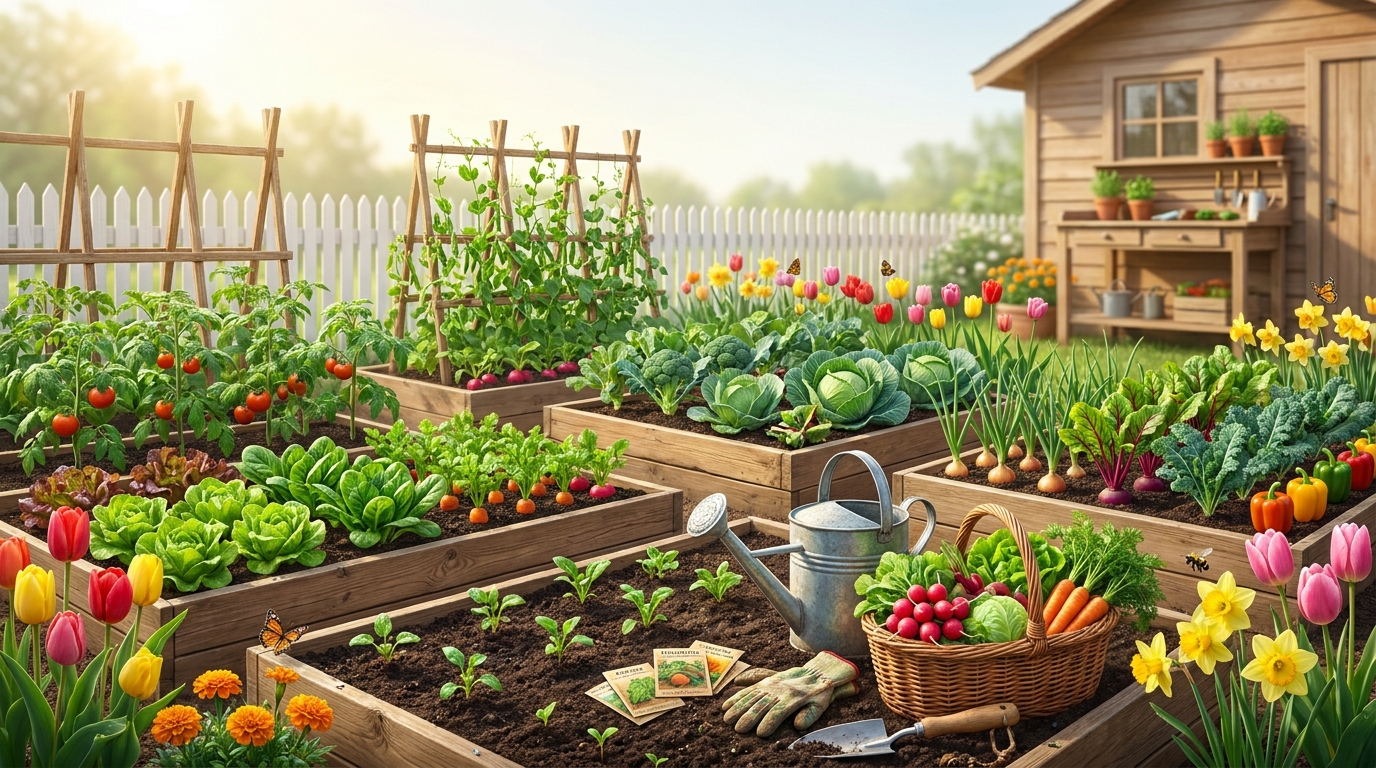
Which vegetables to sow in early, mid and late spring, which can handle a frost and which can't, with a planting table and tips for a steady harvest.
Spring planting works best in three waves. Hardy crops such as peas, broad beans, spinach and radishes go in first, while it's still cool, because they can handle light frosts. Roots and leafy crops follow in mid-spring. Tender, frost-sensitive crops like tomatoes, beans and courgettes wait until after your last frost. Here are twelve of the best vegetables to plant, grouped by when they go in.
Know your last frost date
Everything in this guide is timed around your area's average last frost date. Look it up for your town, then count backwards and forwards from it. Containers and raised beds warm up faster than open ground, so you can often start a little earlier in them.
At a glance
| Vegetable | When | How | Approx. to harvest |
|---|---|---|---|
| Peas | Early spring | Direct sow | 10–14 weeks |
| Broad (fava) beans | Early spring | Direct sow | 12–16 weeks |
| Spinach | Early spring | Direct sow | 6–8 weeks |
| Radishes | Early to late spring | Direct sow | 4 weeks |
| Onion sets | Early to mid-spring | Plant sets | 16–20 weeks |
| Lettuce and salad leaves | Early spring onward | Direct sow or transplant | 4–10 weeks |
| Early potatoes | Early to mid-spring | Plant seed potatoes | 10–12 weeks |
| Carrots | Mid-spring | Direct sow | 10–16 weeks |
| Beetroot | Mid-spring | Direct sow | 8–12 weeks |
| Chard and kale | Mid-spring | Direct sow or transplant | 8–10 weeks |
| Tomatoes | Late spring, after frost | Transplant | 8–12 weeks from planting |
| Courgettes, cucumbers, beans | Late spring, after frost | Transplant or direct sow | 8–10 weeks |
Times vary with variety, weather and region. Use the seed packet as your final guide.
Early spring: the hardy crops
1. Peas
Peas like cool weather and germinate in cold soil. Sow in a wide, shallow trench about 5 cm (2 in) deep, with seeds about 5 cm apart, and give them twiggy sticks or netting to climb (RHS). Sugar snap and mangetout varieties are the most productive in small spaces.
2. Broad beans
One of the hardiest crops you can grow. Sow 5 cm (2 in) deep and about 20 cm (8 in) apart. Pinch out the tips once the first pods form; it speeds cropping and deters blackfly.
3. Spinach
Spinach bolts (runs to seed) in heat and long days, so spring is its best season. Sow a short row every few weeks and pick young leaves regularly.
4. Radishes
The fastest crop in the garden, often ready in about four weeks. Sow a pinch every two weeks for a steady supply; they go woody and hot if left in the ground too long.
5. Onion sets
Small, partly grown onions are far easier than seed. Push them into loose soil 10 cm (4 in) apart with just the tips showing (RHS). Birds sometimes pull them out; push them back in.
6. Lettuce and salad leaves
Sow little and often, every two to three weeks, for a continuous supply. Cut-and-come-again salad mixes give the most leaves from the least space (RHS).
7. Early potatoes
Plant chitted seed potatoes a few weeks before your last frost and protect shoots with fleece if frost threatens. They're perfect in bags; see how to grow potatoes in grow bags.
Mid-spring: roots and leaves
8. Carrots
Sow thinly, direct, once the soil has warmed, and keep the surface moist until seedlings appear. Short varieties suit containers; see growing carrots in containers.
9. Beetroot
Each beetroot "seed" is actually a cluster, so thin seedlings to one per spot. Harvest at golf-ball size for the sweetest roots, and use the young leaves in salads.
10. Chard and kale
Both crop for months from a single sowing: pick the outer leaves and let the centre keep growing. Chard's coloured stems are as decorative as any flower.
Late spring: after the last frost
11. Tomatoes
Plant out hardened-off plants only when nights stay above about 10°C (50°F). Plant deep and add a stake at the same time. Our beginner's tomato guide covers everything else.
12. Courgettes, cucumbers and beans
These tender crops are killed by frost and sulk in cold soil. Sow them indoors a few weeks before your last frost, or direct outdoors once the soil is warm. See our guide to growing cucumbers.
Tips for a better spring harvest
- Prepare the soil first: spread compost on beds a few weeks before sowing. See our soil improvement guide.
- Keep fleece handy to throw over young crops on cold nights.
- Sow in small batches every few weeks instead of all at once, to avoid gluts.
- Water seedlings regularly in dry spring weather. See how often to water vegetable plants.
Frequently asked questions
What is the easiest vegetable to grow in spring?
Radishes and salad leaves: fast, reliable and fine in pots.
Can I plant vegetables before the last frost?
Yes, hardy ones: peas, broad beans, spinach, radishes, onion sets, lettuce and early potatoes (with frost protection).
When should I plant tomatoes outside?
After your last frost date, once nights stay above about 10°C (50°F).
More seasonal advice in seasonal gardening and our vegetable guides.