How to Grow Tomatoes: A Complete Beginner's Guide
Gardens Glow Editorial · 2026-07-29
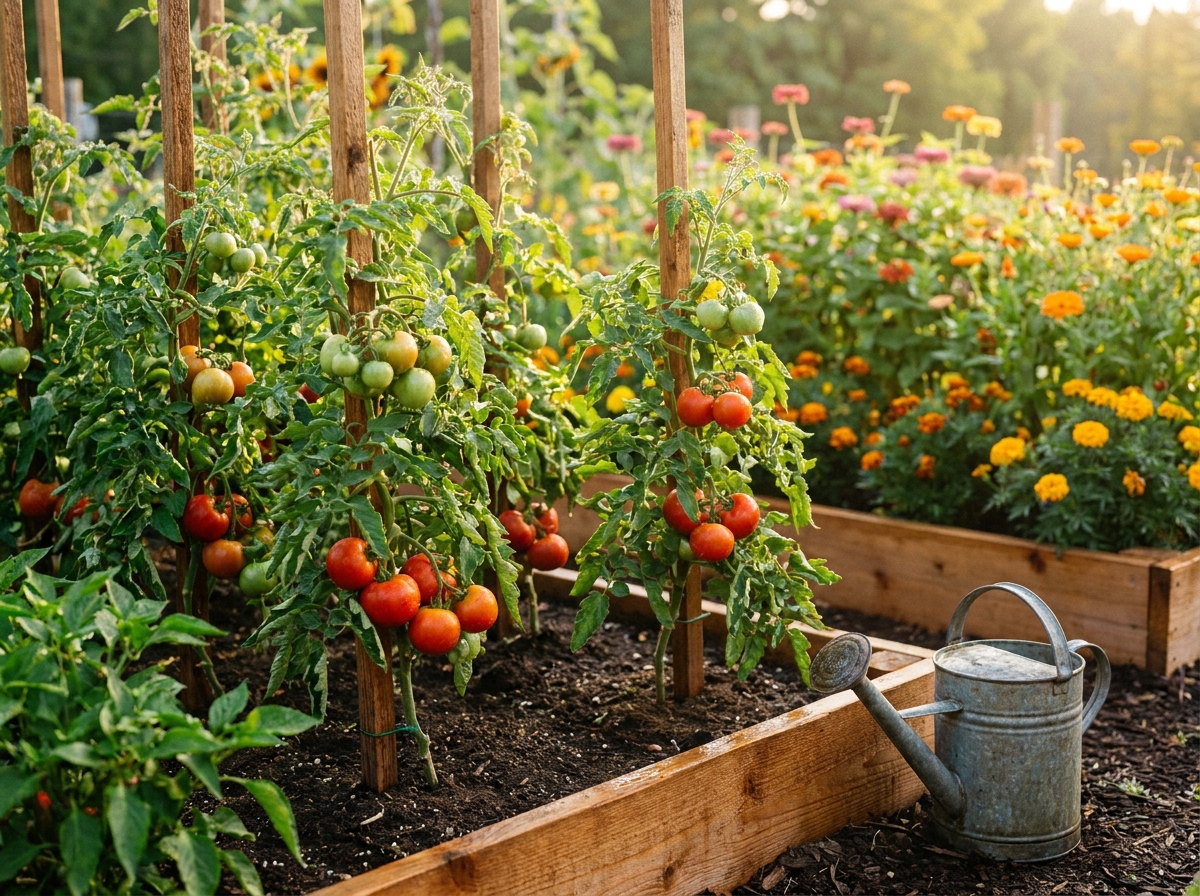
Everything a first-time grower needs: choosing varieties, planting deep, watering, feeding, pruning, and fixing problems like blossom end rot and split fruit.
Tomatoes reward beginners who get a handful of basics right: plenty of sun, a variety suited to your space, deep planting, steady watering and the right feed once fruit appears. Most tomato problems trace back to one of those. This guide walks through each step from choosing plants to picking ripe fruit, plus how to fix the problems you're most likely to meet.
The short version
- Pick a spot with at least six to eight hours of direct sun.
- Choose a variety that suits your space: bush types for pots, vining types for tall supports.
- Plant out only after the last frost, once nights stay above about 10°C (50°F).
- Plant deep, burying the stem up to the first leaves.
- Put the stake or cage in at planting time.
- Water deeply and consistently, at the base of the plant.
- Switch to a high-potassium tomato feed once the first fruits form.
- Pick at full colour, or at first blush and ripen indoors.
Bush or vine? Determinate vs indeterminate
- Determinate (bush) tomatoes grow to a fixed height, usually 60–120 cm (2–4 ft), and ripen most of their fruit over a few weeks. They need little or no pruning and are the easiest choice for pots and small gardens.
- Indeterminate (vining or cordon) tomatoes keep growing and fruiting until frost and can reach 2 m (6 ft) or more. They need a tall stake and regular removal of side shoots, but produce over a much longer season.
Beginner-friendly varieties
| Type | Examples | Why it's good for beginners |
|---|---|---|
| Cherry | 'Sungold', 'Sweet Million' | Fast, prolific and forgiving; first ripe fruit earliest |
| Container / trailing | 'Tumbling Tom' | Compact bush habit for pots and hanging baskets |
| Medium slicing | 'Moneymaker', 'Celebrity', 'Early Girl' | Reliable croppers; 'Celebrity' has good disease resistance |
| Paste | 'Roma' | Firm, meaty fruit for sauces; determinate |
If you've never grown tomatoes before, start with one cherry variety. Large beefsteak and heirloom types are delicious but slower, more prone to splitting and less forgiving.
Seeds or young plants?
To grow from seed, sow indoors six to eight weeks before your last frost date, about 6 mm (¼ in) deep, somewhere warm (around 21–27°C / 70–80°F) for quick germination. Move seedlings to individual pots once they have their first true leaves, and grow them in your brightest window or under lights so they don't stretch.
Buying plants is simpler for a first season. Choose short, stocky plants with dark green leaves and no flowers or fruit yet; tall, leggy plants that are already flowering take longer to settle in.
Harden off, then plant out
Plants raised indoors need a week to ten days of gradual acclimatisation before they go outside. Put them out for a few hours in a sheltered spot on the first day and build up to leaving them out overnight. Plant out after your last frost date, once nights stay above about 10°C (50°F). Tomatoes planted into cold soil simply sit and sulk.
Sun, soil and spacing
- Sun: six hours is the minimum; eight or more gives the best crops and the sweetest fruit.
- Soil: well-drained and enriched with compost, ideally with a pH of about 6.2–6.8. See our soil improvement guide if your soil is heavy clay or very sandy.
- Rotation: avoid planting where tomatoes or potatoes grew in the last couple of years, since soil-borne diseases can carry over.
- Spacing: 45–60 cm (18–24 in) for staked vining plants, and 60–90 cm (2–3 ft) for bush types or caged plants.
Plant deep
Tomatoes can grow roots all along their buried stems. Strip off the lower leaves and plant so that only the top third of the plant shows above the soil. Leggy plants can even be laid sideways in a trench with the tip bent gently upward. The extra roots make plants sturdier and better at finding water. Push in the stake or cage now, while you can see where the roots are.
Growing tomatoes in pots and grow bags
- Use at least 20 litres (5 US gallons) of potting mix per plant for bush and cherry types, and 30–40 litres (8–10 gallons) for vining types.
- A standard grow bag takes two plants, not three.
- Pots dry out fast: in hot weather, expect to water once or even twice a day.
- Bush varieties such as 'Tumbling Tom' are the easiest container tomatoes.
Watering: the number one skill
Water deeply at the base of the plant, ideally in the morning, so the soil is moist to a depth of 15–20 cm (6–8 in). In the ground, that's typically 2.5–5 cm (1–2 in) of water a week, more in hot, dry spells. Keep water off the leaves to reduce disease, and add a 5–7 cm (2–3 in) layer of mulch once the soil has warmed to hold moisture steady. For more on judging when to water, see how often to water vegetable plants.
Consistency matters more than quantity. Swinging between dry and soaked causes two of the most common tomato problems: blossom end rot and split fruit.
Feeding
Mix compost into the planting hole, then hold off on fertilizer until the first small fruits have set. From then on, use a high-potassium tomato feed every one to two weeks (weekly in containers), following the label. Too much nitrogen early on gives you a lush, leafy plant with very little fruit. Our guide to homemade fertilizers includes options suitable for tomatoes.
Support and pruning
- Vining (indeterminate) plants: tie the main stem loosely to its stake every 30 cm (12 in) as it grows. Pinch out the side shoots that appear where leaves join the main stem, while they're small. In short-season climates, pinch out the top of the plant in late summer so its energy goes into ripening the fruit already there; the RHS suggests stopping outdoor cordons after four or five flower trusses (RHS).
- Bush (determinate) plants: don't remove side shoots, since that's where much of the fruit forms. A cage or a couple of short stakes is enough.
- All plants: remove leaves touching the soil to cut down on splashed-up disease.
Flowers but no fruit?
Tomatoes pollinate themselves, helped by wind and insects. A gentle shake of the stems when flowers are open can help, especially in greenhouses. The more common cause of flowers dropping off is temperature: fruit sets poorly when days are above about 32°C (90°F), when nights stay above about 24°C (75°F), or when nights fall below about 13°C (55°F). Fruit set usually resumes once the weather settles. See also protecting plants from extreme heat.
Common problems and fixes
Blossom end rot
A sunken, leathery black patch on the bottom of the fruit. It's caused by a shortage of calcium in the developing fruit, but in most gardens the soil already has enough calcium: the real problem is uneven watering, which stops the plant moving calcium into the fruit (UGA Extension). The fix is steady, deep watering and mulch, not calcium sprays. It isn't a disease and doesn't spread between plants (Oregon State University Extension). Remove affected fruit; later fruit is usually fine once watering evens out.
Split or cracked fruit
Heavy rain or a big watering after a dry spell makes fruit swell faster than its skin can stretch. Water consistently and pick ripening fruit before forecast downpours.
Yellowing leaves
Older lower leaves yellowing late in the season is normal. Yellowing that starts early or spreads upward can point to a lack of nutrients, overwatering or early blight. Our guide to fixing yellow tomato leaves covers how to tell them apart.
Early blight and leaf spots
Brown spots with rings, like a target, starting on the lower leaves. Remove affected leaves, mulch to stop soil splashing up, water at the base and rotate where you plant next year.
Late blight
Fast-spreading brown patches on leaves and stems in warm, wet weather, followed by rotting fruit. It can destroy plants within days. Remove and dispose of infected plants (not in the compost), and choose blight-resistant varieties next year if it's common where you live.
Pests
Aphids and whitefly cluster under leaves; hose them off or use insecticidal soap. In North America, hornworms (large green caterpillars) can strip a plant quickly; pick them off by hand.
Harvesting
Pick tomatoes when they've reached full colour and give slightly when squeezed. You can also pick them at the "breaker" stage, when they first show a blush of colour, and let them finish ripening indoors at room temperature. This is useful before heavy rain or when birds are a problem. Don't refrigerate ripe tomatoes; cold dulls their flavour. At the end of the season, pick any full-sized green fruit before the first frost and ripen them indoors.
Cherry tomatoes typically start ripening about 55–65 days after planting out; larger slicing varieties take 70–85 days or more.
Frequently asked questions
How long do tomatoes take to grow?
From transplanting, about 55–65 days for cherry tomatoes and 70–85 days or more for larger varieties. Add six to eight weeks if you start from seed.
How often should I water tomato plants?
Deeply, two or three times a week in the ground in normal weather, adjusting for heat and rain. Containers often need daily watering in summer. Check the soil rather than following a fixed schedule.
What's the best tomato for pots?
Compact bush or trailing varieties such as 'Tumbling Tom', or a cherry tomato with a stake in a large pot.
Should I add calcium for blossom end rot?
Usually not. Most soils have enough calcium; the problem is inconsistent watering that stops it reaching the fruit. Even out your watering and mulch the soil.
Do I have to prune tomato plants?
Only vining (indeterminate) types, by removing side shoots. Bush (determinate) types don't need pruning.
Planning the rest of your plot? See the best vegetables to plant in spring, our cucumber growing guide, or build a raised garden bed. More in our vegetable guides.