How to Grow Sunflowers From Seed to Bloom
Gardens Glow Editorial · 2026-07-26
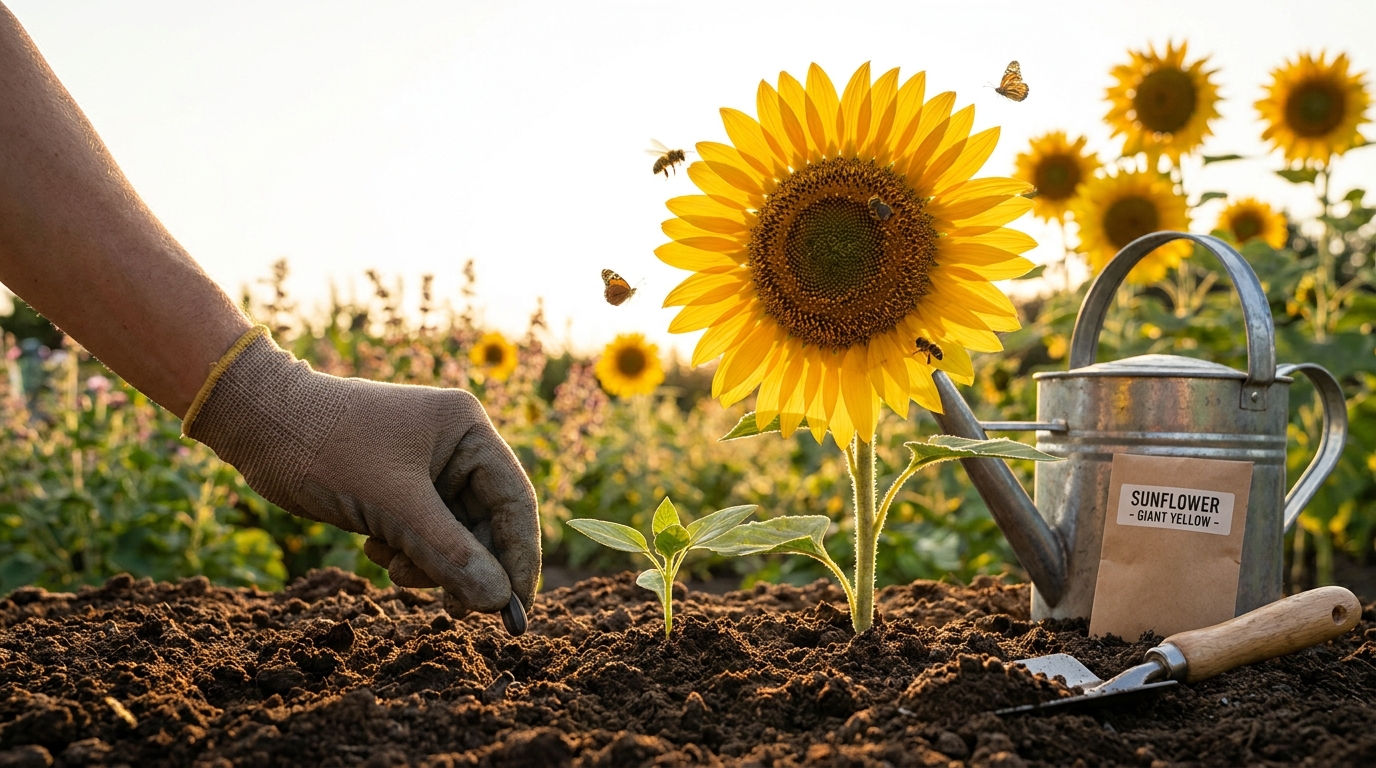
Choose the right sunflower, sow at the right time and depth, protect seedlings from slugs and birds, support tall stems, and harvest flowers or seeds.
Sunflowers are about as close to foolproof as flowers get: big seeds that are easy to handle, fast growth and a reliable show in about two to three months. The main things that go wrong are slugs and birds eating the seedlings, and tall plants snapping in the wind. Both are easy to prevent once you know to expect them.
Pick the right type
| Type | Height | Good for |
|---|---|---|
| Giant, single-stemmed (e.g. 'Russian Mammoth') | 2.5–4 m (8–13 ft) | Height contests, seed heads for birds or snacking |
| Branching | 1.5–2 m (5–6.5 ft) | Lots of smaller flowers over a long season |
| Pollen-free cut flower types | 1.2–1.8 m (4–6 ft) | Vases; no pollen dropping on furniture |
| Dwarf (e.g. 'Teddy Bear', 'Little Becka') | 40–90 cm (16–36 in) | Pots, front of borders, windy gardens |
Colours range from classic yellow through lemon, cream, orange, deep red and bronze. Single, open-centred flowers are the best for bees.
When and where to sow
Sunflowers hate frost and cold soil. Sow outdoors after your last frost date, once the soil has warmed to at least 10°C (50°F) (UGA Extension). Choose the sunniest spot you have, with at least six to eight hours of direct sun, and shelter from strong wind if you're growing tall types. They aren't fussy about soil, as long as it drains; heavy, waterlogged clay can rot the roots.
Sowing: direct or in pots?
Direct sowing
Push seeds 2–3 cm (about an inch) deep, two seeds per spot, and thin to the stronger seedling. Spacing depends on type: dwarf varieties 15–30 cm (6–12 in) apart, standard and branching types around 45 cm (18 in), and giants 60 cm (2 ft) or more. Seedlings appear in one to two weeks.
Starting in pots (best if you have slugs or birds)
Slugs, snails, mice and birds all love sunflower seeds and seedlings. Sowing indoors two to three weeks before your last frost gives the plants a head start. Use deep pots or cardboard tubes, since sunflowers grow a long taproot, sow one seed per pot, and plant out when they have two or three pairs of true leaves. Protect young plants with a cut-off plastic bottle or a ring of grit until they're about 30 cm (1 ft) tall.
Watering and feeding
- Seedlings: keep the soil lightly moist until they're established.
- Established plants: a deep soak once a week in dry weather is better than daily sprinkling. Deep watering encourages deep roots, which hold tall plants steady.
- While flowering: water matters most as buds form and open.
- Feeding: most garden soils are fine. Too much nitrogen gives soft, weak stems. In poor soil or pots, a balanced liquid feed every two to three weeks is enough.
For more on watering, see how often to water garden plants.
Supporting tall sunflowers
Varieties over about 1.5 m (5 ft) are prone to snapping in summer storms, especially once the heavy heads form. Push a sturdy stake in next to each plant when it's about 60 cm (2 ft) tall, and tie the stem loosely to it every 30 cm (1 ft) as it grows. Planting against a fence or wall also gives shelter, and in a row they help to support each other.
Sunflowers in pots
Dwarf varieties do well in containers at least 30 cm (12 in) deep and wide, one plant per pot. Water daily in hot weather and give a liquid feed every couple of weeks. Taller varieties need very large pots, 45 cm (18 in) or more, and staking.
Cutting sunflowers for the vase
Cut in the morning, when the petals are just starting to lift away from the centre, and put the stems straight into water. Strip most of the leaves. Branching types keep producing new flowers after cutting. Sow a few single-stem types every two weeks from late spring to early summer for a continuous supply. More tips in our guide to cut flowers you can grow from seed.
Harvesting the seeds
- Wait until the back of the flower head turns yellow-brown and the petals have dried and dropped.
- If birds are getting to them first, cover the head with a paper bag or a piece of fleece tied loosely around the stem.
- Cut the head with about 30 cm (1 ft) of stem and hang it upside down somewhere dry and airy for a week or two.
- Rub the seeds out with your hand, then store them in a paper bag or roast them to eat.
Or leave a few heads standing in the garden through autumn as food for finches and other seed-eating birds.
Common problems
- Seedlings disappear overnight: slugs or snails. Start in pots and protect young plants.
- Seeds dug up: birds, squirrels or mice. Cover sown spots with netting or start indoors.
- Stems snap: no support, too much nitrogen, or a very exposed site.
- Small flowers: too crowded, not enough sun, or a branching variety (normal).
Frequently asked questions
How long do sunflowers take to grow?
Most flower about 70–100 days after sowing; dwarf types tend to be quicker.
Do sunflowers follow the sun?
Young plants turn during the day to track the sun. Once they flower, most heads settle facing east.
Will sunflowers come back next year?
Garden sunflowers are annuals and die after flowering, though dropped seed may sprout the following spring.
Do sunflowers attract bees and butterflies?
Yes, especially single, pollen-bearing varieties. See our butterfly garden guide for more pollinator plants.
Find more easy flowers in our list of low-maintenance flowers and all our flower guides.