How to Grow Cucumbers From Seed to Harvest
Gardens Glow Editorial · 2026-07-25
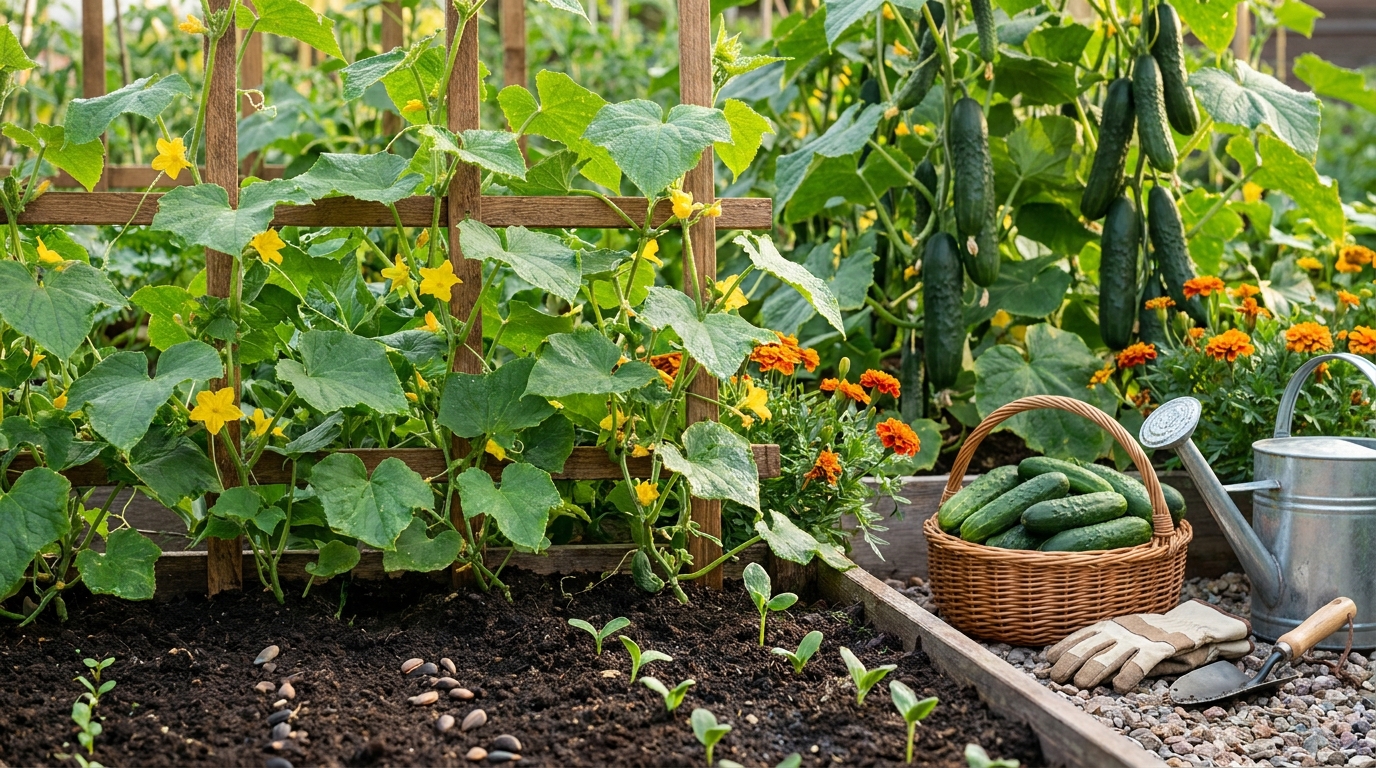
Choose the right cucumber, sow it warm, plant out after frost, train it up a support, water evenly and pick often. Fixes for bitter fruit and mildew too.
Cucumbers grow fast and crop heavily once summer warms up, and a single healthy plant can produce dozens of fruit. They have two non-negotiables: warmth, because they're killed by frost and stall in cold soil, and steady water, because dry spells make the fruit bitter. Train them up a support, pick them young and often, and they'll keep going for weeks.
Choose the right type
| Type | Where | Notes |
|---|---|---|
| Outdoor (ridge) cucumbers | Beds, pots, outdoors | Tough, often with slightly rough skin; need insects to pollinate |
| Greenhouse (all-female) cucumbers | Greenhouse or very warm, sheltered spot | Long, smooth fruit; set fruit without pollination |
| Mini or snacking cucumbers | Pots, small spaces | Small, crunchy fruit on compact plants |
| Pickling cucumbers | Outdoors | Short, firm fruit picked small |
If you have only a balcony or patio, choose a compact or mini variety bred for containers. Look for powdery mildew resistance on the seed packet; it's the most common problem late in the season.
Sowing
Sow indoors about three to four weeks before your last frost date. Push seeds on their side about 1.5 cm (½ in) deep into small pots of moist compost, one or two per pot, and keep them warm, ideally above 20°C (68°F) (RHS). They germinate in about a week. Don't sow too early: leggy cucumber seedlings waiting weeks for warm weather never do as well.
In warm climates, you can sow straight into the ground once the soil is warm and all danger of frost has passed.
Planting out
- When: after your last frost, once nights stay above about 10–12°C (50–54°F). Harden plants off for a week first.
- Where: full sun, sheltered from wind, in rich soil with plenty of compost dug in.
- Spacing: about 45 cm (18 in) apart if trained up a support; more if left to sprawl.
- Containers: one plant per pot of at least 20 litres (5 US gallons), filled with good potting mix.
Give them something to climb
Training cucumbers up a trellis, netting or canes saves space, keeps fruit clean and straight, and improves air flow, which reduces mildew. Tie the main stem in loosely as it grows; the tendrils will grip netting on their own.
- Outdoor types: pinch out the growing tip when the plant has six or seven leaves to encourage side shoots, which carry most of the fruit.
- Greenhouse cordons: train a single stem up a string or cane, remove flowers and side shoots on the bottom 60 cm or so, then pinch side shoots two leaves beyond each fruit.
Watering and feeding
Cucumbers are more than 90% water and need steady moisture. Water deeply at the base whenever the top few centimetres of soil are dry, which in hot weather can mean daily for pots. Mulch beds to keep moisture even. Uneven watering is the main cause of bitter, misshapen fruit. See how often to water vegetable plants.
Once the first fruits start to swell, feed every one to two weeks with a high-potassium liquid feed such as tomato feed. Comfrey feed works well too; see homemade fertilizers.
Flowers and pollination
Outdoor cucumbers produce male flowers (on a plain stalk) and female flowers (with a tiny cucumber behind the petals). Bees carry pollen between them. If fruit shrivels without growing, pollination may be the problem: grow flowers nearby to attract bees, or transfer pollen yourself with a small paintbrush. All-female greenhouse varieties don't need pollination at all.
Harvesting
Pick cucumbers young and often, when they're firm, evenly coloured and before the seeds get big. That's typically 15–20 cm (6–8 in) for slicing types and smaller for minis and picklers. Cut rather than pull them off, to avoid damaging the vine. Check plants every day or two at the height of summer; a cucumber left to grow huge signals the plant to stop producing.
Common problems
- Bitter fruit: stress from dry spells, heat or cold. Water evenly and mulch. See also protecting plants from extreme heat.
- White powder on leaves: powdery mildew, common in late summer, worse when roots are dry. Water regularly, improve air flow, remove the worst leaves and grow resistant varieties.
- Yellow mottled leaves and distorted fruit: cucumber mosaic virus, spread by aphids. Remove affected plants.
- Seedlings eaten overnight: slugs and snails. Protect young plants.
- Fine speckling and webs in a greenhouse: red spider mite. Raise humidity by damping down paths.
- Striped or spotted beetles (North America): cucumber beetles. Cover young plants with fleece until they flower.
Frequently asked questions
How long do cucumbers take to grow?
Usually 50–70 days from sowing to the first harvest, depending on variety and warmth.
Can I grow cucumbers in pots?
Yes. Choose a compact or mini variety, use a pot of at least 20 litres, give it a small trellis and water daily in summer.
Why are my cucumber plants flowering but not producing fruit?
Early on, plants often produce male flowers first; female flowers follow. If female flowers wither, pollination is the likely problem.
How many cucumbers does one plant produce?
A healthy, well-watered plant picked regularly can produce a dozen or more fruit over the season, and more for mini varieties.
Planning your plot? See the best vegetables to plant in spring and our tomato guide. More in our vegetable guides.